
ℹ️ Affiliate Disclosure: This article may contain affiliate links. If you book or purchase through these links, we may earn a commission at no additional cost to you.
Understanding Machine Embroidery Thread vs Sewing Thread Differences
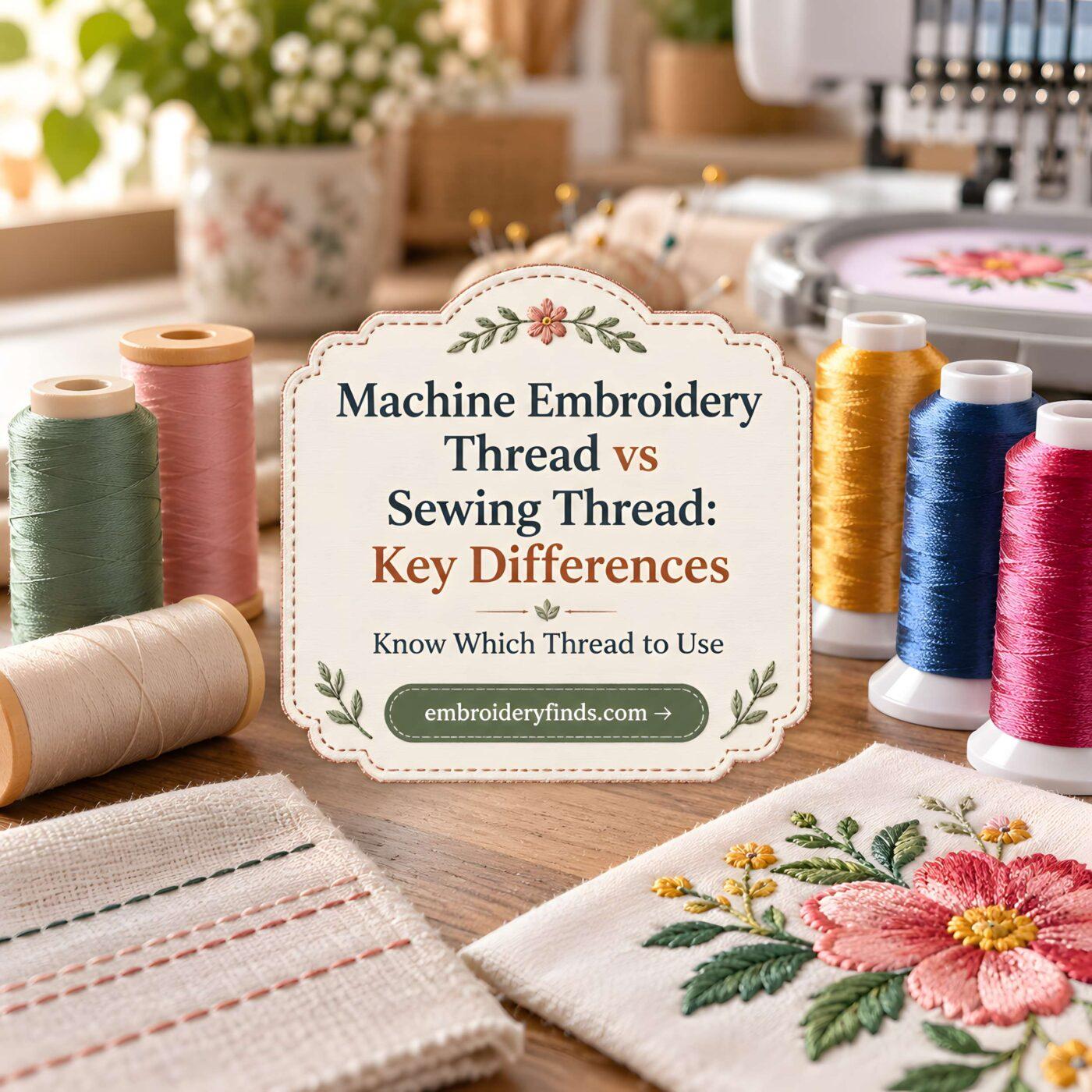
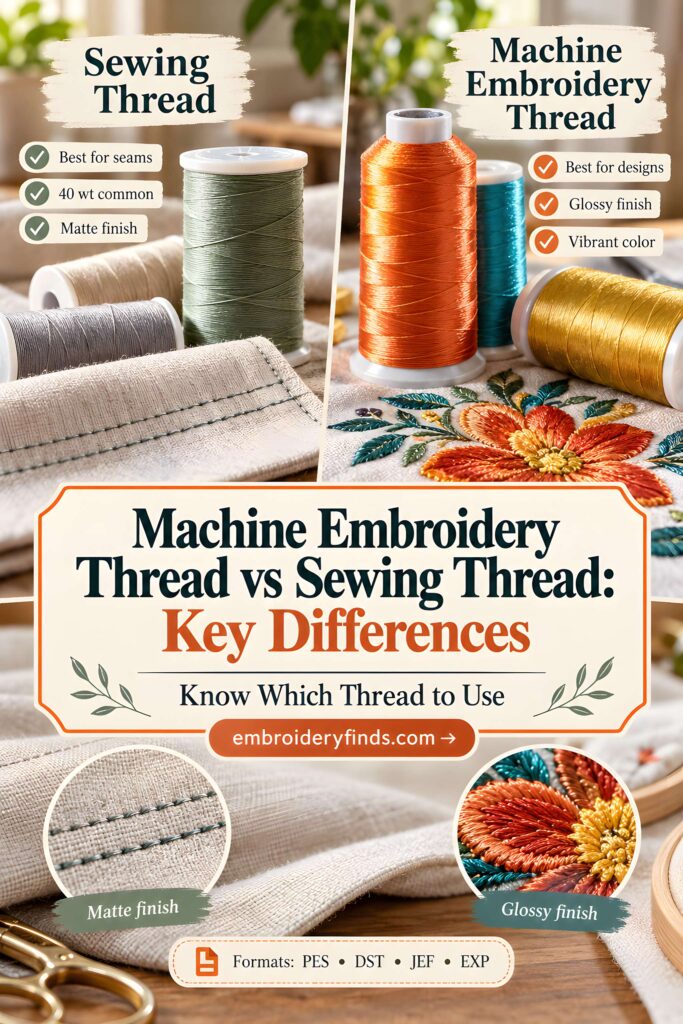
Machine embroidery thread and sewing thread may look similar on the spool, but they are designed for very different jobs. Machine embroidery thread is primarily made to create smooth, attractive decorative stitches, while regular sewing thread is generally designed to create durable seams and hold pieces of fabric together.
That difference affects everything from thread weight and construction to sheen, strength, stitch coverage, and how the thread behaves when running through your machine.
For most computerized embroidery designs, a quality 40-weight machine embroidery thread is the safest starting point. Regular sewing thread can sometimes be used for decorative embroidery, but it may change the appearance and coverage of a design that was digitized with embroidery thread in mind.
Here is what you need to know before choosing your next spool.
Machine Embroidery Thread vs Sewing Thread at a Glance
| Feature | Machine Embroidery Thread | Regular Sewing Thread |
|---|---|---|
| Main purpose | Decorative stitching and designs | Seams and garment construction |
| Typical appearance | Smooth and often lustrous | Usually matte or low-sheen |
| Common weight | 40 wt is widely used | Often 40–60 wt depending on type |
| Common fibers | Polyester, rayon, cotton, metallic | Polyester, cotton, nylon, blends |
| Best for | Logos, monograms, fills, lettering, decorative designs | Seams, hems, repairs, construction |
| Design priority | Appearance and stitch coverage | Seam strength and durability |
| Typical bobbin setup | Often uses a finer embroidery bobbin thread | Usually matched to the sewing application |
| Interchangeable? | Sometimes for decorative sewing | Sometimes for embroidery, but results may differ |
The important point is that neither category is defined by a single fiber. Polyester, for example, can be used to make both sewing thread and machine embroidery thread.
The difference is how the thread is engineered and what job it is intended to perform.
What Is Machine Embroidery Thread?
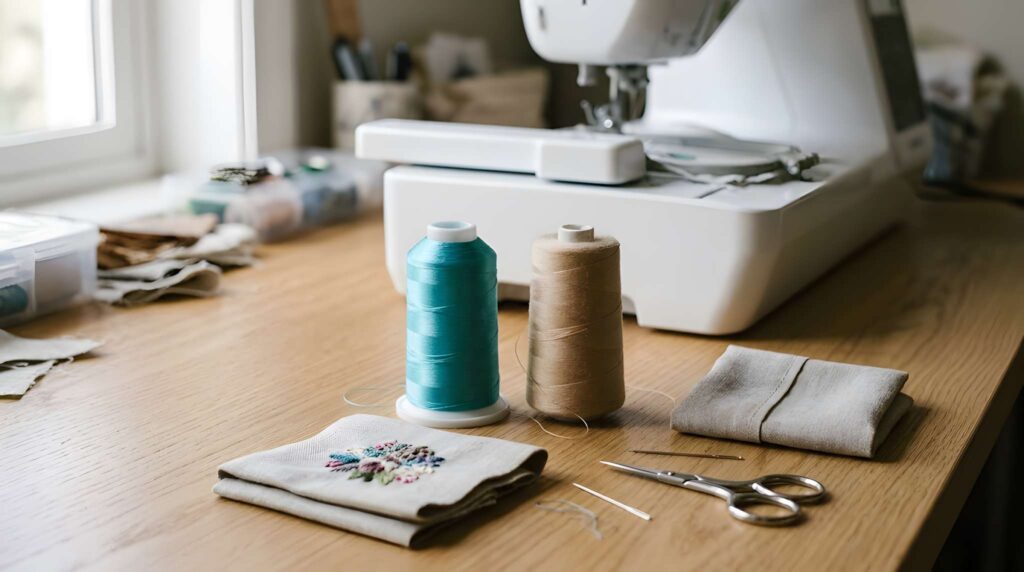
Machine embroidery thread is thread designed for decorative stitching produced by an embroidery machine.
Unlike ordinary construction seams, machine embroidery may place hundreds or thousands of visible stitches close together. The thread therefore needs to travel smoothly through the machine while producing even coverage and an attractive surface.
Common machine embroidery thread materials include:
- Polyester
- Rayon or viscose
- Cotton
- Metallic thread
- Specialty decorative fibers
For everyday computerized machine embroidery, 40-weight polyester or rayon thread is extremely common.
Many embroidery designs are digitized around this approximate thread size. Changing to a noticeably thicker or thinner thread can alter the amount of coverage and the apparent density of the design.
Why Is Embroidery Thread Often Shiny?
Embroidery is meant to be seen.
A smooth, reflective surface helps satin stitches, fill stitches, lettering, monograms, and decorative details stand out against the fabric.
This is why polyester and rayon embroidery threads often have considerably more luster than ordinary all-purpose sewing thread.
Matte embroidery threads also exist, so sheen is not an absolute rule, but it is one of the easiest visual differences to notice.
What Is Regular Sewing Thread?
Regular sewing thread is usually designed to join fabric together.
Think about the jobs it performs:
- Constructing garment seams
- Sewing hems
- Attaching pieces of fabric
- Repairing clothing
- Quilting
- Topstitching
- General sewing
In many of these applications, the thread should disappear into the seam rather than become the visual focus.
A sewing thread therefore needs a useful combination of strength, abrasion resistance, flexibility, and compatibility with the fabric being sewn.
All-purpose polyester sewing thread is one of the most common examples.
Key Differences Between Machine Embroidery Thread and Sewing Thread
Although the two types of thread overlap in some areas, five differences matter most for machine embroiderers.
1. Machine Embroidery Thread Is Decorative; Sewing Thread Is Structural
Purpose is the easiest way to understand the difference.
Machine embroidery thread creates the visible design.
It might form:
- A flower
- A monogram
- A logo
- A patch
- Decorative lettering
- An applique border
- A large filled embroidery motif
Regular sewing thread is more commonly responsible for holding the project together.
A garment seam, for example, needs to tolerate movement and repeated stress. Decorative embroidery normally sits on the surface of the fabric instead.
This does not mean embroidery thread is weak. High-quality polyester embroidery thread can be very durable.
It simply means that the two thread categories are optimized for different tasks.
2. Embroidery Thread Usually Has More Sheen
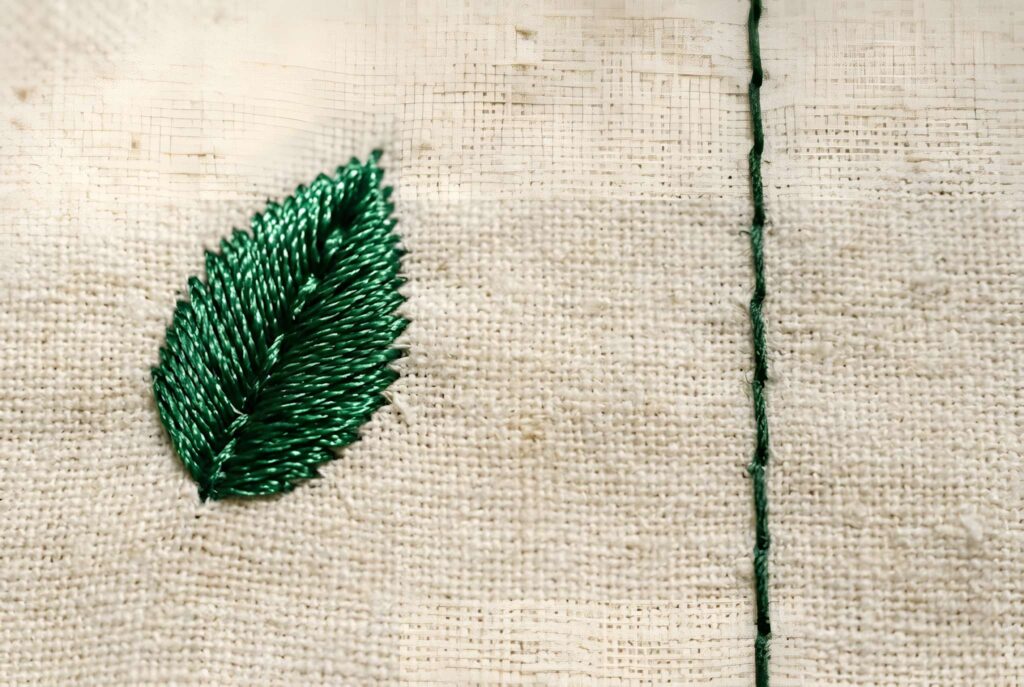
Place a spool of ordinary sewing thread next to a spool of glossy machine embroidery thread and the visual difference may be obvious.
Embroidery thread is frequently manufactured to reflect light, which makes satin stitches and fill areas look smooth and vibrant.
Regular sewing thread is often more subdued.
For machine embroidery, this difference can noticeably affect the finished design.
A floral motif stitched with lustrous rayon or polyester embroidery thread may have a polished, almost silky finish. The same design stitched with matte sewing thread can appear flatter.
Neither appearance is automatically wrong—it depends on the look you want.
3. Thread Weight Can Change Embroidery Coverage
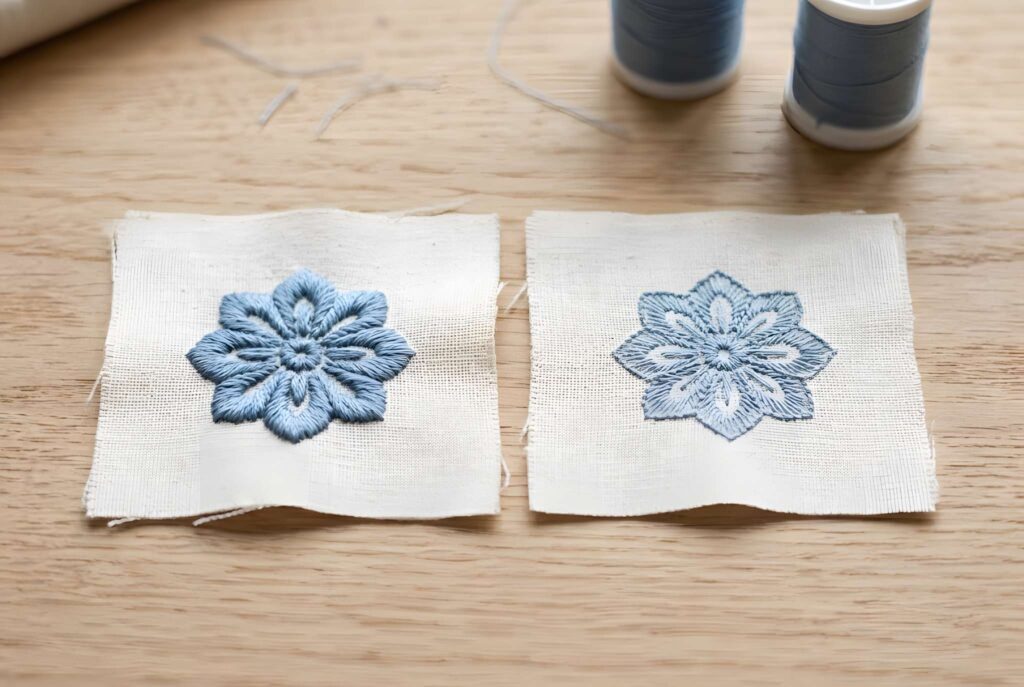
Thread weight is especially important in machine embroidery.
A large percentage of standard embroidery designs are created with 40-weight embroidery thread in mind.
If you replace it with a considerably finer thread, more fabric may show between stitches.
If you use a significantly thicker thread, the design can become overly dense.
This is particularly important with:
- Small lettering
- Satin columns
- Dense fill areas
- Tiny details
- Compact monograms
For very small lettering, a finer embroidery thread such as 60 wt may sometimes provide cleaner detail, provided the design and needle setup are suitable.
One confusing detail is that thread numbering systems are not always intuitive. With many weight-based embroidery thread systems, a higher weight number represents a finer thread.
Always check the manufacturer’s specifications rather than judging only by the number printed on the spool.
4. Sewing Thread and Embroidery Thread Are Constructed Differently
Two threads made from polyester can behave very differently.
Regular sewing thread is often designed around the requirements of seam construction.
Machine embroidery thread, meanwhile, must repeatedly change direction while forming thousands of decorative stitches. Smooth running, consistent diameter, stitch appearance, and coverage become important considerations.
That is why buying thread based solely on fiber content can be misleading.
Instead of asking:
“Is this polyester?”
ask:
“Is this polyester thread designed for machine embroidery?”
That distinction matters much more.
5. The Bobbin Setup Is Often Different
Machine embroidery frequently uses a finer bobbin thread underneath the design.
Using a thinner bobbin thread helps reduce unnecessary bulk on the reverse side while allowing the upper embroidery thread to dominate the visible surface.
For example, manufacturer recommendations may pair a 40-weight embroidery top thread with a much finer bobbin thread.
The exact bobbin thread you should use depends on your embroidery machine, so check the machine manual before changing weights.
Can You Use Sewing Thread for Machine Embroidery?
Yes, regular sewing thread can sometimes physically run through an embroidery machine, but it is usually not the best default choice for a design intended for machine embroidery thread.
The issue is not simply whether the machine can form stitches.
The finished embroidery may look different because regular sewing thread can have different:
- Thickness
- Twist
- Surface finish
- Sheen
- Coverage
- Friction characteristics
A design digitized for 40 wt embroidery thread may not look the same when stitched with ordinary all-purpose thread.
When Sewing Thread Might Work
You may intentionally experiment with sewing thread when:
- You want a matte embroidery effect
- You are creating a test stitch-out
- The design is simple and relatively open
- The thread is compatible with your machine and needle
Always test the design on scrap fabric first.
A successful test tells you far more than simply assuming two spools are interchangeable because they look similar.
When Embroidery Thread Is the Better Choice
Use purpose-made machine embroidery thread for:
- Dense embroidery designs
- Satin-stitch lettering
- Monograms
- Logos
- Patches
- Applique borders
- Multicolor designs
- Designs where color and sheen matter
It gives you a more predictable starting point because most machine embroidery designs are created with embroidery-specific thread in mind.
Try Your Thread on a Simple Embroidery Design
One of the easiest ways to see how different threads behave is to stitch the same design using two thread types. Start with a small floral motif, simple monogram, or beginner-friendly outline design that doesn’t require thousands of dense stitches.
You can explore a variety of machine embroidery designs, including decorative patterns, lettering, and seasonal motifs suitable for different projects.
Choose a design that fits your hoop, check its supported machine file formats, and stitch a small sample with 40 wt embroidery thread. This gives you a useful reference before experimenting with other threads.
Pay attention to stitch coverage, sheen, tension, and how smoothly the thread moves through the machine.
Can You Sew With Machine Embroidery Thread?
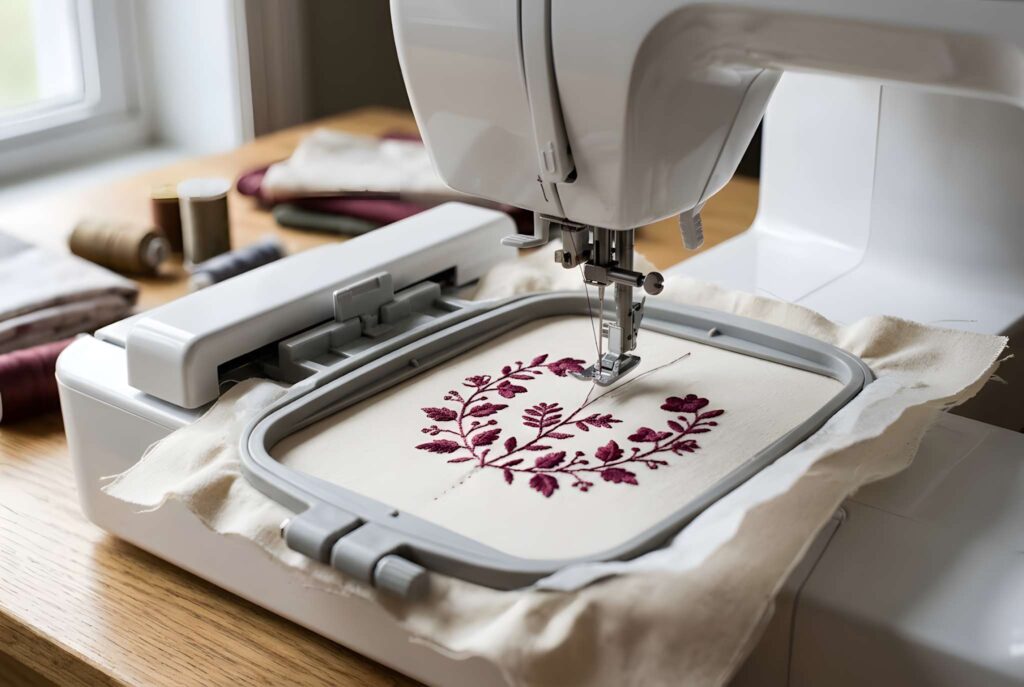
You can use machine embroidery thread in a regular sewing machine for certain decorative techniques.
For example, it can work well for:
- Decorative stitching
- Embellishment
- Visible topstitching
- Applique details
- Decorative quilting accents
However, using decorative embroidery thread for important construction seams is generally not the best choice unless the thread manufacturer specifically recommends it for that purpose.
A shoulder seam, waistband, bag seam, or other stressed construction area should use thread designed to handle the demands of that seam.
A decorative stitch and a structural seam have completely different jobs.
Polyester vs Rayon Machine Embroidery Thread
Once you decide to use embroidery thread, another question appears:
Should you choose polyester or rayon?
Both are popular.
Polyester Embroidery Thread
Polyester is an excellent general-purpose machine embroidery choice because it is durable and available in a huge range of colors.
It works particularly well for:
- Children’s clothing
- Towels
- Uniforms
- Frequently washed items
- Bags
- Patches
- Everyday embroidery projects
Polyester embroidery thread is also a practical option for beginners because durability is often a priority while learning machine settings.
Rayon Embroidery Thread
Rayon is known for its soft feel and beautiful luster.
It is popular for:
- Monograms
- Decorative clothing
- Formal embroidery
- Home decor
- Decorative motifs
- Projects where sheen is especially important
Rayon can create a rich, satin-like appearance.
For projects that will experience demanding washing conditions or heavy wear, polyester may be the more practical choice.
Polyester vs Rayon: Quick Comparison
| Feature | Polyester Embroidery Thread | Rayon Embroidery Thread |
|---|---|---|
| Sheen | Bright, reflective | Rich, satin-like |
| Durability | Excellent | Good |
| Frequent washing | Very suitable | Project dependent |
| Decorative appearance | Excellent | Excellent |
| Beginner-friendly | Yes | Yes, with appropriate setup |
| Common machine weight | 40 wt | 40 wt |
There is no universal winner.
Choose according to the fabric, finished item, washing requirements, and appearance you want.
How to Choose the Right Thread for Machine Embroidery
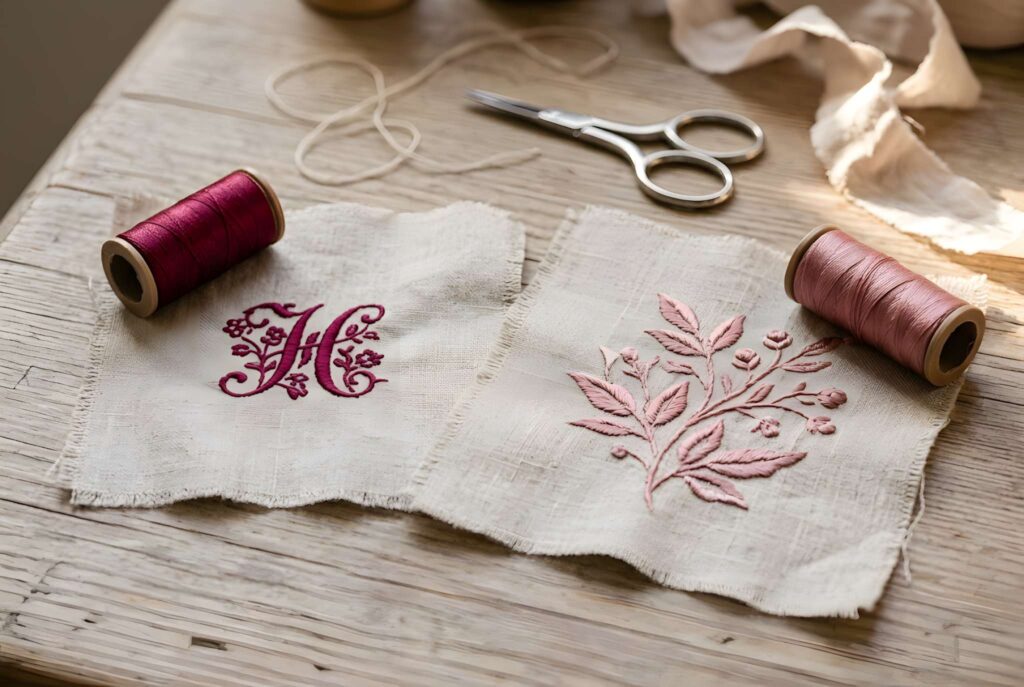
Choosing thread becomes much easier when you start with the project rather than the spool.
Step 1: Check the Design Requirements
See whether the embroidery designer specifies a particular thread weight.
If no unusual requirement is given, 40 wt embroidery thread is a common starting point.
Step 2: Consider the Finished Item
Ask how the project will be used.
A decorative wall hanging has different requirements than a child’s sweatshirt or frequently washed kitchen towel.
Step 3: Match the Needle to the Thread and Fabric
Thread cannot be considered independently from the needle.
A needle that is too small for the thread may increase friction or cause stitching problems.
The correct needle also depends on the fabric.
Step 4: Use Suitable Bobbin Thread
Follow your machine manufacturer’s bobbin recommendations.
Do not automatically use the same top thread in the bobbin unless the design or technique specifically calls for it.
Step 5: Test Before Stitching the Final Item
Whenever you change:
- Thread brand
- Thread weight
- Fiber type
- Needle
- Fabric
- Stabilizer
run a test stitch.
This is especially important before embroidering an expensive garment, bag, or finished blank.
Match Your Thread to Your Next Embroidery Project

The best thread choice often becomes clearer once you know what you’re making. A delicate monogram, colorful floral design, and densely stitched patch may require different approaches to thread selection.
Before starting your next project, browse downloadable embroidery patterns and choose a design that matches your machine’s capabilities and your experience level.
Check the design’s stitch count, dimensions, recommended thread colors, and available file formats. Then select a thread that complements the finished item’s fabric, appearance, and washing requirements.
Final Thoughts
When comparing machine embroidery thread vs sewing thread, the biggest difference is purpose.
Machine embroidery thread is designed to become part of the visible design, which is why smooth stitching, color, coverage, and sheen matter so much. Regular sewing thread is primarily intended to create dependable seams and hold fabric together.
For most computerized embroidery projects, starting with a quality 40 wt polyester or rayon embroidery thread gives you the most predictable results.
Regular sewing thread can sometimes be used for embroidery, and embroidery thread can sometimes be used for decorative sewing, but neither substitution should be automatic.
Match the thread to the job, check your embroidery machine’s recommendations, and run a test stitch whenever you change thread type or weight. That simple approach can prevent many thread breaks, coverage problems, and disappointing stitch-outs.
Frequently Asked Questions
Is machine embroidery thread the same as sewing thread?
No. Machine embroidery thread is primarily designed for decorative stitches and visual coverage, while sewing thread is normally designed for seams, garment construction, and general sewing. They can sometimes be substituted, but they are not automatically interchangeable.
What thread should I use for machine embroidery?
A quality 40 wt polyester or rayon machine embroidery thread is a common starting point for standard computerized embroidery designs. Always check the requirements of your machine and the specific design.
Can I use regular sewing thread in my embroidery machine?
Sometimes. Your machine may physically stitch with regular sewing thread, but the design may have less sheen or different coverage than intended. Test the thread before using it on the final project.
Is polyester sewing thread the same as polyester embroidery thread?
No. Both can be made from polyester, but the threads can have different construction, finish, twist, weight, and intended purpose. Look for thread specifically labeled for machine embroidery when embroidering.
Why is 40 wt thread common for machine embroidery?
Many computerized embroidery designs are digitized around approximately 40 wt thread, making it a useful balance between coverage and detail for standard designs.
Can I use embroidery thread for normal sewing?
You can use it for decorative sewing and embellishment. For structural seams that must tolerate repeated stress, use a thread intended for construction unless the thread manufacturer states that the embroidery thread is suitable.
What thread is best for small embroidery lettering?
Finer embroidery thread, such as 60 wt, can sometimes produce cleaner small lettering because it takes up less space than 40 wt thread. The design must be digitized appropriately, and needle size, tension, stabilizer, and fabric also affect the result.
Is polyester or rayon better for machine embroidery?
Both can produce excellent embroidery. Polyester is particularly useful when durability and repeated washing matter. Rayon is valued for its soft feel and attractive satin-like luster.