ℹ️ Affiliate Disclosure: This article may contain affiliate links. If you book or purchase through these links, we may earn a commission at no additional cost to you.
Understanding Using Regular Thread in an Embroidery Machine and Its Impact
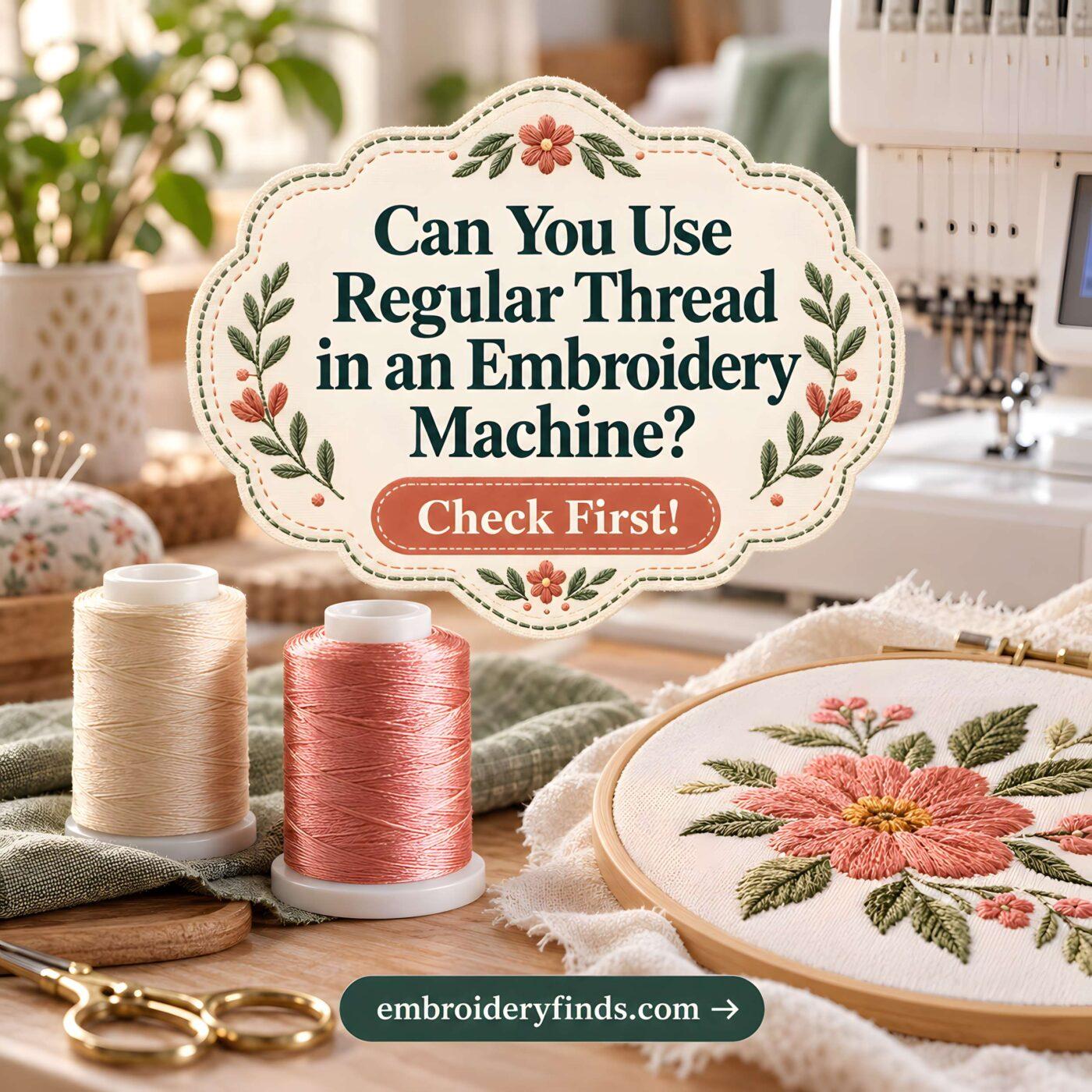
Yes, you can sometimes use regular sewing thread in an embroidery machine, but it is usually better to use thread designed specifically for machine embroidery. Regular thread may stitch successfully in some designs, yet differences in thread weight, finish, strength, and construction can affect tension, coverage, shine, and thread breakage.
If you only need to test a simple design or experiment with a particular effect, regular thread may work. For finished embroidery projects, however, using the thread type recommended for your machine generally produces more predictable results.
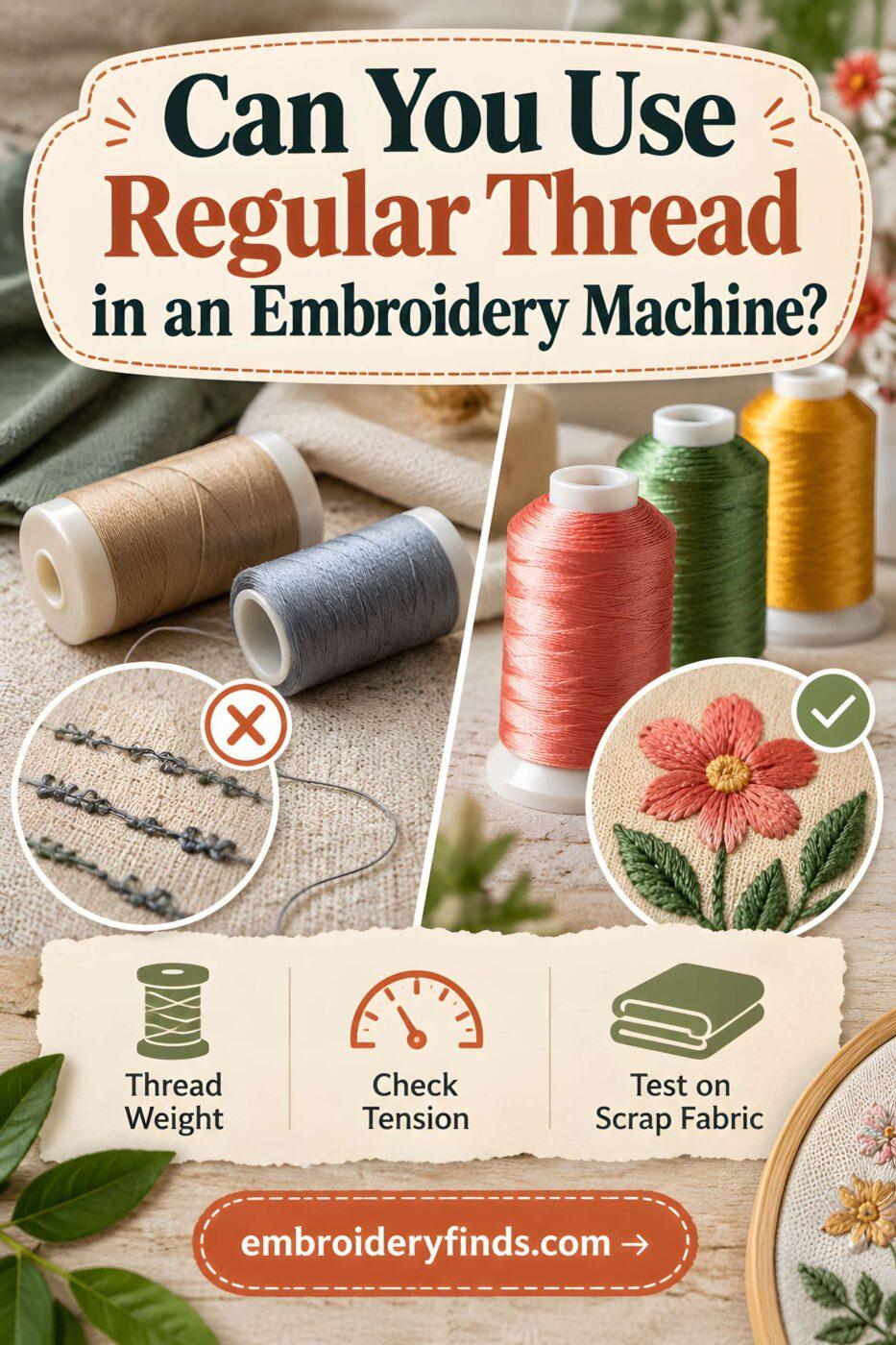
Brother, for example, recommends 40–50 weight rayon or polyester machine embroidery thread as the upper thread for many embroidery machines. Its guidance also specifies a finer thread for the bobbin rather than using the same thread on both sides.
Regular Sewing Thread vs. Embroidery Thread
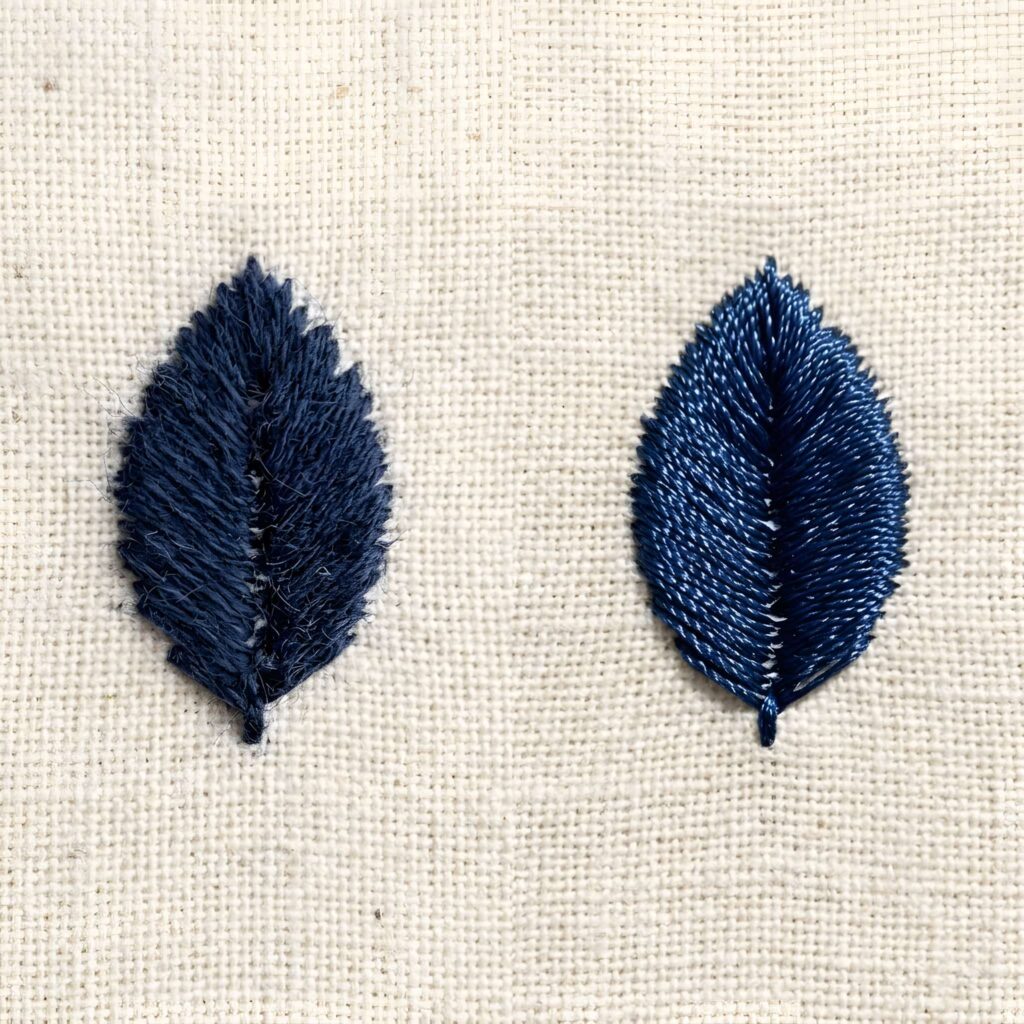
At first glance, a spool of ordinary sewing thread may not look very different from embroidery thread. Both pass through the needle, both are available in polyester varieties, and both can create stitches.
The difference becomes more noticeable when the machine begins stitching hundreds or thousands of closely spaced stitches at embroidery speed.
| Feature | Regular Sewing Thread | Machine Embroidery Thread |
|---|---|---|
| Main purpose | Seams and general sewing | Decorative machine embroidery |
| Typical finish | Often matte or low sheen | Usually smoother and more lustrous |
| Common materials | Polyester, cotton, blends | Polyester, rayon, specialty fibers |
| Embroidery performance | Can vary | Designed for decorative stitching |
| Appearance | More subdued | Brighter, more decorative finish |
| Best use | Construction and sewing | Filled designs, satin stitches, lettering |
The exact characteristics depend on the brand and type of thread, so the label on the spool matters more than simply calling something “regular thread.”
Why Embroidery Thread Is Usually the Better Choice
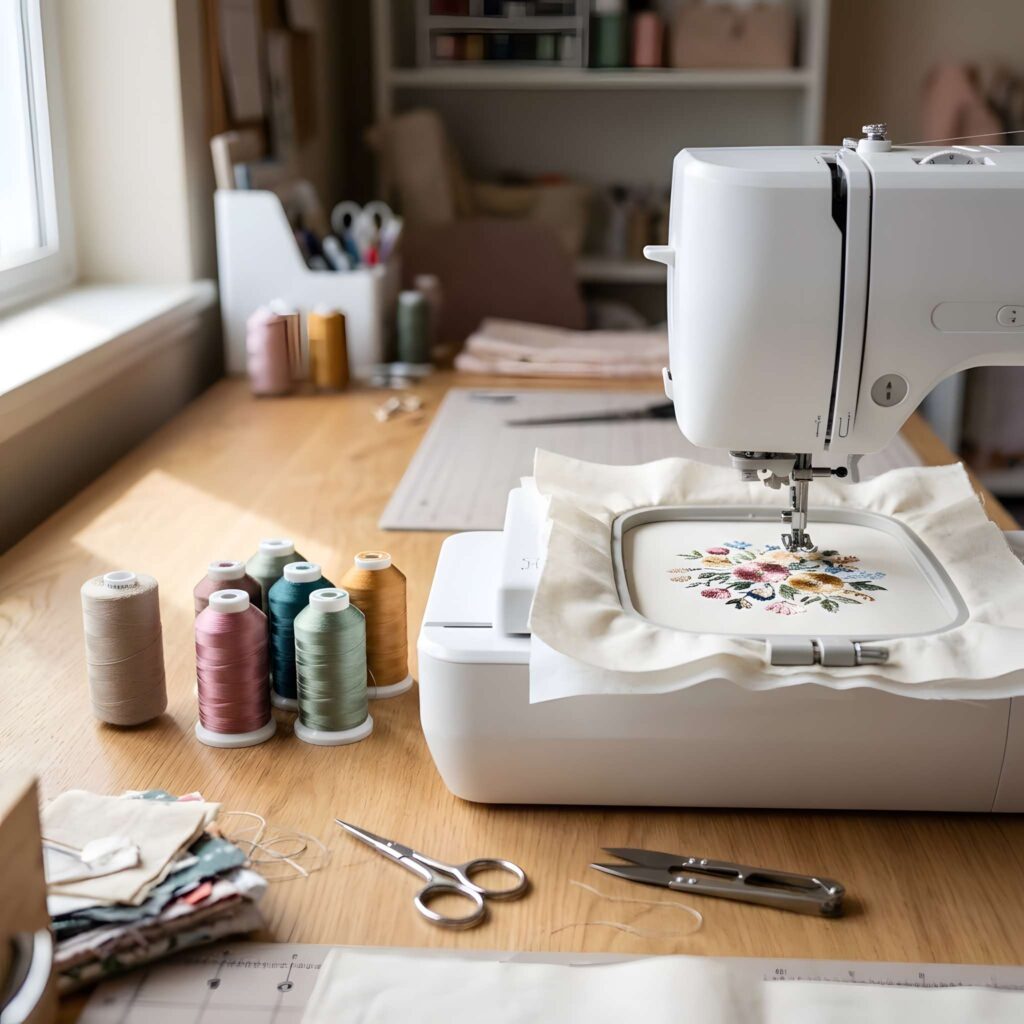
Machine embroidery places different demands on thread than ordinary sewing.
A sewing machine may use thread to form relatively long rows of straight or zigzag stitches. An embroidery design can place thousands of stitches within a relatively small area, including satin columns, outlines, underlay, fills, and frequent direction changes.
Machine embroidery thread is intended for that type of decorative stitching.
It also tends to provide the smooth, slightly glossy finish people associate with machine-embroidered designs.
That difference becomes especially noticeable with:
- satin stitch lettering;
- monograms;
- filled floral designs;
- logos;
- dense patches;
- decorative borders;
- multicolor designs.
If one color in a design is stitched with matte sewing thread while the others use shiny embroidery thread, the difference may be visible even when the colors themselves match closely.
What Happens If You Use Regular Thread?
Using regular sewing thread does not automatically mean your embroidery project will fail.
Some threads run surprisingly well.
Others can create problems almost immediately.
You May Get More Thread Breaks
Embroidery machines can run at relatively high speeds while repeatedly changing stitch direction.
A thread that does not feed smoothly through the thread path, tension system, and needle may fray or break more often.
If the machine suddenly begins stopping for upper-thread breaks after switching thread types, the thread itself should be one of the first things you check.
The Design May Look Different
A design digitized with common embroidery thread in mind may have a slightly different appearance when sewn with ordinary sewing thread.
You may notice:
- less shine;
- thinner-looking areas;
- different coverage;
- a more textured surface;
- visible gaps in fills;
- or, with a heavier thread, embroidery that feels denser than expected.
This does not necessarily make the result bad. Sometimes a matte finish is exactly what you want.
It is simply different.
Tension May Need Attention
Thread diameter and surface characteristics influence how the upper and bobbin threads balance.
Brother specifically warns that using an unsuitable thread weight can contribute to tension problems and thread breakage.
If you switch thread types and suddenly see bobbin thread pulling strongly to the front, loops underneath the fabric, or irregular stitches, return to the machine manual before making large tension changes.
Can Regular Polyester Sewing Thread Be Used for Embroidery?
Regular polyester sewing thread is one of the more practical sewing threads to experiment with because polyester is strong and widely available.
However, “polyester” alone does not make two threads identical.
A polyester construction thread and a polyester machine embroidery thread may differ in:
- thickness;
- twist;
- surface finish;
- sheen;
- intended operating speed;
- and how they behave within dense stitching.
For occasional experimentation, ordinary polyester thread may work reasonably well.
For a design you plan to display, wash repeatedly, give as a gift, or sell, purpose-made embroidery thread is the safer choice because it removes one unnecessary variable from the project.
What Thread Weight Should You Use in an Embroidery Machine?
Thread weight can be confusing because different labeling systems exist, but the machine manufacturer’s recommendation should always take priority.
For many Brother embroidery-only models, the recommended upper thread is 40–50 weight rayon or polyester machine embroidery thread. Brother also specifies dedicated lighter bobbin thread, with the exact recommendation depending on the machine type.
That does not mean every embroidery machine uses exactly the same combination.
Check your manual because:
- machine designs differ;
- tension systems differ;
- bobbin systems differ;
- specialty threads may require different needles or settings.
Avoid choosing thread by color alone.
The correct color in an unsuitable thread weight can cause more frustration than choosing the closest shade in a thread designed for your machine.
Can You Use Regular Thread in the Bobbin?
This is where you should be particularly careful.
Embroidery machines commonly use a finer bobbin thread so that the back of the design remains relatively light and the top embroidery thread dominates the front.
Using a regular all-purpose sewing thread in the bobbin can change the balance of the design.
For example, Singer’s FUTURA guidance differentiates between regular all-purpose bobbin thread for sewing and finer bobbin thread for embroidery.
That is why replacing both your upper embroidery thread and bobbin thread with ordinary sewing thread is usually a bigger change than experimenting with the upper thread alone.
Follow the bobbin-thread recommendation for your specific machine.
When Is Regular Sewing Thread Worth Trying?
There are several situations where experimenting with regular thread can make sense.
Practice Stitch-Outs
If you are learning how your embroidery machine works and do not care about the final appearance, an inexpensive test on scrap fabric can be useful.
However, remember that a test made with one thread may not behave exactly like the final project stitched with another.
Simple Outline Designs
A low-density running-stitch or outline design puts fewer demands on the thread than a large, densely filled design.
That makes simple designs better candidates for experimentation.
Matte Embroidery Effects
Not every embroidered project needs a glossy finish.
Regular sewing thread can sometimes create a softer or more understated appearance that works nicely on rustic, vintage, primitive, or intentionally muted projects.
Temporary Tests
You might simply want to confirm:
- design placement;
- hoop orientation;
- approximate finished size;
- or whether a design fits your project.
In that case, using thread already on hand may be perfectly reasonable.
When Should You Avoid Regular Thread?
There are several situations where embroidery thread is clearly preferable.
Use purpose-made machine embroidery thread when stitching:
- small lettering;
- satin stitch monograms;
- dense fill designs;
- detailed logos;
- large designs with long stitch times;
- garments that will be washed frequently;
- gifts where appearance matters;
- customer orders;
- items you intend to sell.
The more time, fabric, stabilizer, and effort you invest in a project, the less sense it makes to introduce an unpredictable thread just to save a small amount on materials.
How to Test Regular Thread Safely
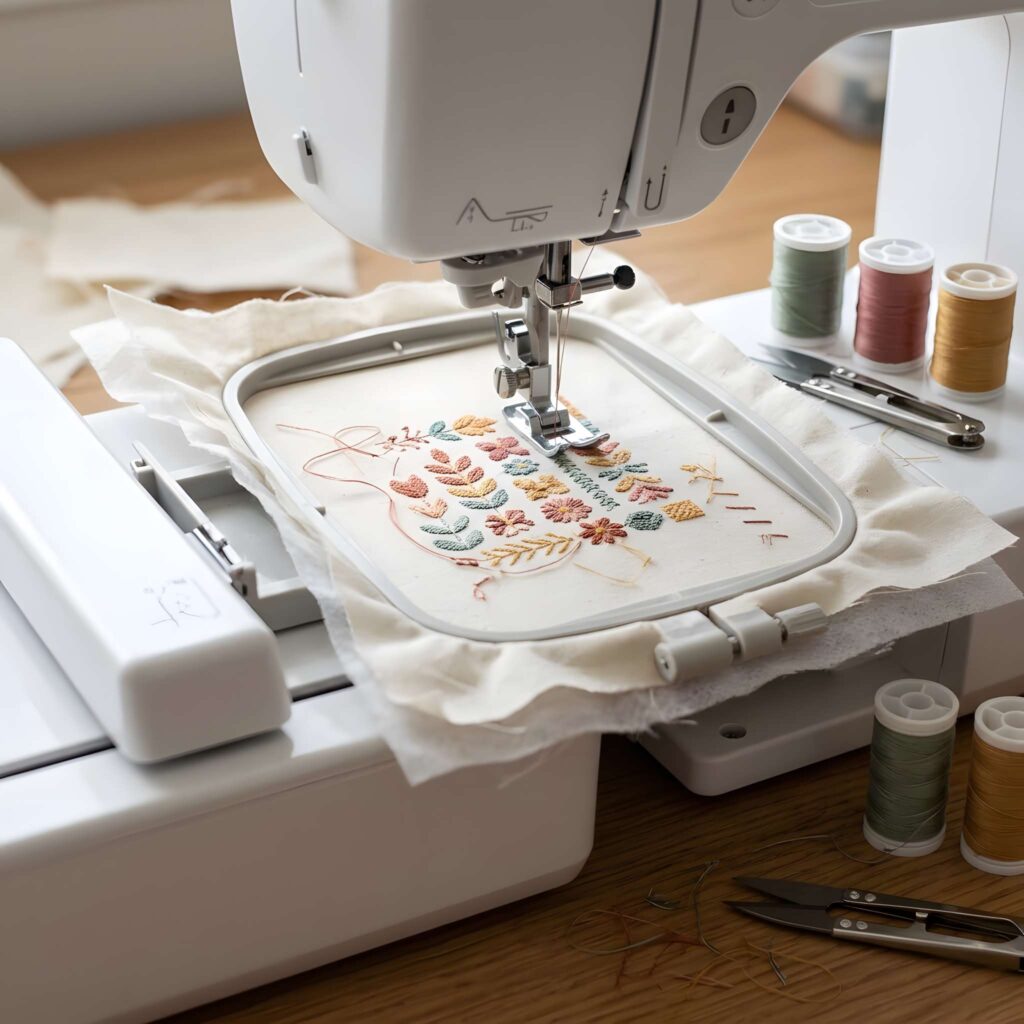
If you want to try regular sewing thread in your embroidery machine, do not start on your finished sweatshirt, towel, bag, or quilt block.
Use a test piece first.
1. Check Your Machine Manual
Look for the recommended upper-thread and bobbin-thread weights.
Machine-specific instructions should take priority over generic advice.
2. Use the Same Fabric
Scrap fabric should be as similar as possible to your actual project.
Thread can behave differently on denim, cotton, knit fabric, canvas, fleece, and towels.
3. Use the Same Stabilizer
The stabilizer affects stitch formation and fabric movement.
Testing a different stabilizer can hide or create problems that may not occur in the real project.
4. Stitch a Small Sample
You do not always need to sew the entire design.
Test an area that contains several stitch types, particularly satin stitching and fills.
Watch for:
- excessive thread breaks;
- fraying;
- looping;
- skipped stitches;
- poor coverage;
- bobbin thread showing on top;
- puckering.
5. Compare the Result
If the sample looks clean and the machine runs smoothly, the thread may be usable for that particular project.
If you are constantly stopping to rethread the machine, the small savings are probably not worth the extra trouble.
Does the Needle Matter?
Absolutely.
Thread, needle, fabric, and stabilizer work as a system.
A needle that is worn, bent, too small, or inappropriate for the fabric can make a thread problem appear much worse.
If you are troubleshooting frequent breaks, inspect the needle before assuming the thread is entirely responsible.
Replace a questionable needle and make sure the needle type suits both your fabric and your machine.
Also check that the thread is:
- properly seated in the tension path;
- passing through every guide;
- feeding smoothly from the spool;
- and not catching underneath the spool cap.
Don’t Forget the Embroidery Design
Sometimes what looks like a thread problem is actually a design-and-material problem.
A very dense embroidery file stitched onto unstable fabric may pucker regardless of whether you use premium embroidery thread.
Likewise, very small lettering can be difficult when the thread, needle size, stitch density, and fabric are poorly matched.
For your first experiments, choose a relatively straightforward design instead of an extremely dense or intricate file.
Once your thread, needle, stabilizer, and fabric combination is running smoothly, you can browse machine embroidery designs for your next project and choose a design that suits your hoop size and machine format.

For small machines, you can also start with one of our 4×4 machine embroidery project ideas, where compact projects make it easier to test new materials without committing to a large stitch-out.
Embroidery Thread vs. Regular Thread: Which Should You Choose?
For most projects, embroidery thread wins.
Choose machine embroidery thread when you want:
- predictable stitching;
- attractive sheen;
- clean satin stitches;
- reliable fills;
- consistent color changes;
- and fewer unnecessary variables.
Choose regular sewing thread when:
- you are experimenting;
- you specifically want a matte effect;
- you are stitching a simple low-density design;
- or you are making a temporary test.
Neither choice should be based purely on what happens to be closest to the machine.
The best thread is the one that matches your machine specifications, design, fabric, needle, and intended finished appearance.
Conclusion
So, can you use regular thread in an embroidery machine? Yes—but that does not mean it is always the best choice.
Regular sewing thread can be useful for practice pieces, simple designs, and special matte effects. But purpose-made machine embroidery thread usually provides more consistent tension, smoother stitching, better decorative coverage, and the finish most people expect from machine embroidery.
Before substituting thread, check your machine manual, confirm the recommended thread weight, keep the correct bobbin thread in place, and run a test stitch on scrap fabric.
A five-minute test can save a good piece of fabric—and a lot of rethreading.
Frequently Asked Questions
Can I use normal sewing thread in my embroidery machine?
Yes, some regular sewing threads can run through an embroidery machine. However, machine embroidery thread is usually the better option because it is made for decorative embroidery and provides more predictable results.
Will regular sewing thread damage an embroidery machine?
Simply using a different thread does not automatically damage the machine, but an unsuitable thread type or weight can contribute to poor tension, repeated breaks, jams, or stitching problems. Always follow the thread specifications in your machine manual.
What is the best thread for an embroidery machine?
A 40-weight polyester machine embroidery thread is a common choice for general machine embroidery, although manufacturer recommendations vary. Some machines also support rayon and other specialty embroidery threads. Brother recommends 40–50 weight rayon or polyester embroidery thread for many of its embroidery models.
Can I use cotton sewing thread for machine embroidery?
Cotton thread can be used for certain embroidery effects, particularly when a matte or traditional appearance is desired. However, you may need to adjust the needle, design density, and machine setup depending on the cotton thread’s weight.
Can I use embroidery thread as bobbin thread?
Usually, you should use the bobbin thread specified for your machine rather than automatically using the same embroidery thread in the bobbin. Embroidery bobbin thread is commonly finer than the upper thread.
Why does my thread keep breaking while embroidering?
Common causes include incorrect threading, unsuitable tension, a damaged or inappropriate needle, poor-quality or unsuitable thread, thread catching around the spool, and an incorrect thread weight. Rethread the machine completely before making major tension adjustments.
Is polyester or rayon better for machine embroidery?
Both are widely used. Polyester is a practical option for projects that need durability and frequent washing, while rayon is often selected for its smooth decorative sheen. Your machine manual and the requirements of the project should guide the final choice.
Can I mix sewing thread and embroidery thread in one design?
Technically, yes. Mixing thread types can create intentional differences in texture and sheen. Test the combination first because the threads may behave differently under the same tension settings.