ℹ️ Affiliate Disclosure: This article may contain affiliate links. If you book or purchase through these links, we may earn a commission at no additional cost to you.
Choosing the Best Thread for Machine Embroidery Projects
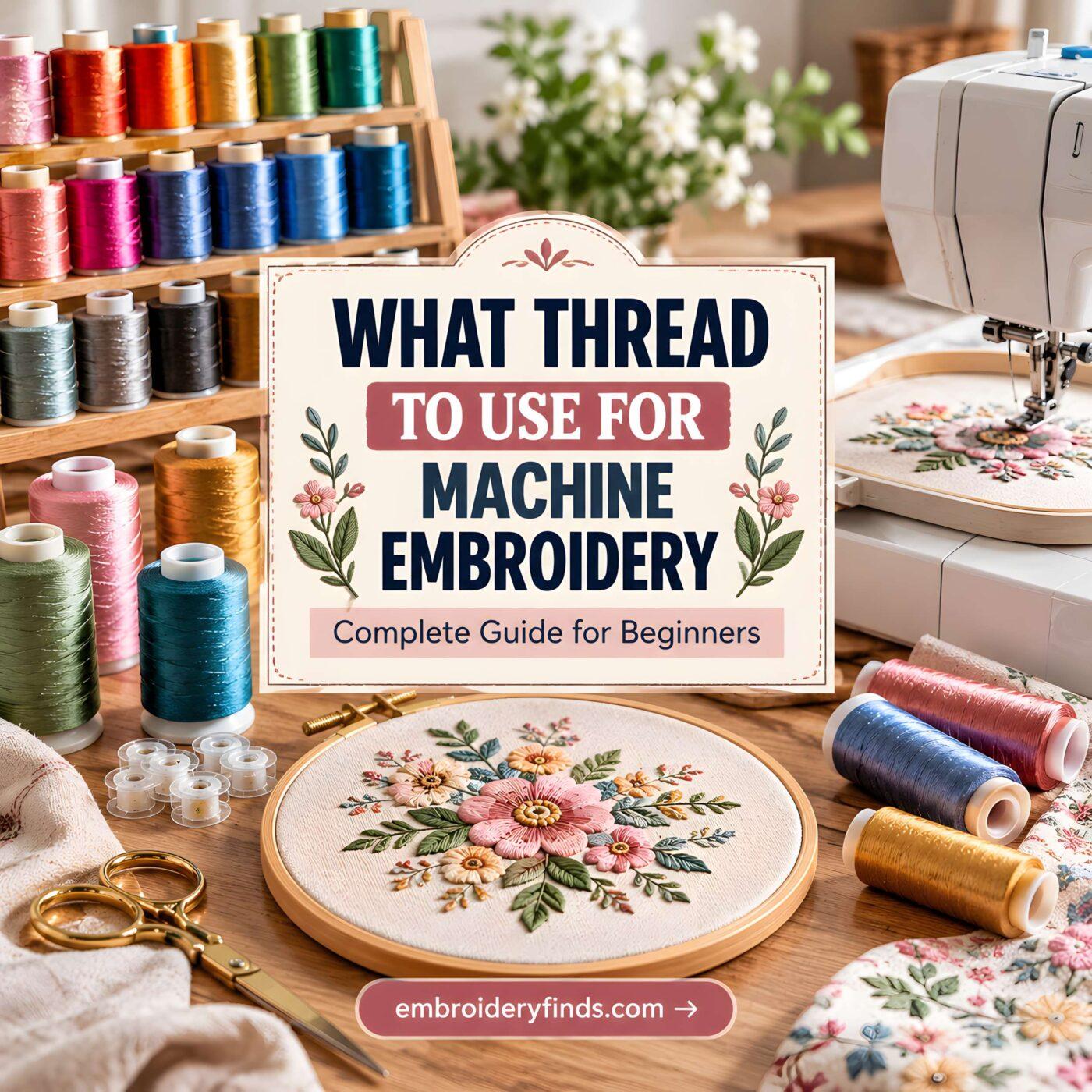
Choosing the right thread can make the difference between smooth, clean machine embroidery and a frustrating project filled with thread breaks, loose stitches, and uneven tension.
For most machine embroidery projects, 40-weight polyester machine embroidery thread is the best place to start. It is strong, versatile, widely available, and suitable for clothing, towels, bags, gifts, and many everyday embroidery projects.
Rayon is another popular choice when you want extra shine, while cotton and metallic threads are useful when you want a particular texture or decorative effect.
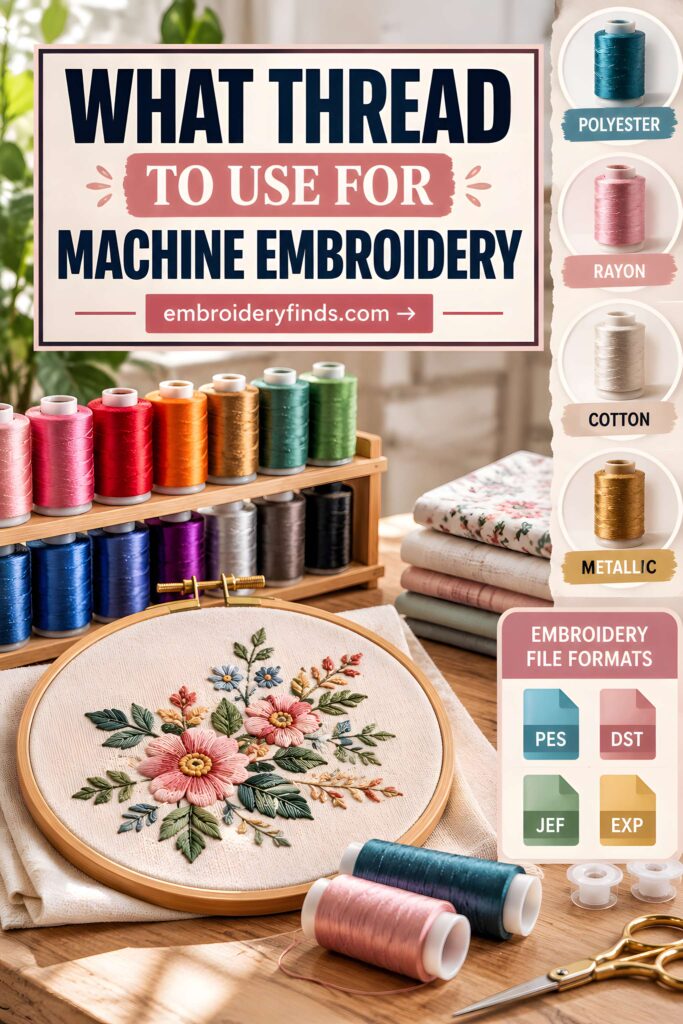
Brother recommends 40–50 weight rayon or polyester machine embroidery thread as the upper thread for many embroidery machines.
Choosing Thread for Your Embroidery Design
Before selecting your thread, take a closer look at the embroidery design itself. A simple floral outline, a dense filled pattern, and a delicate monogram may all need slightly different thread choices.
Most standard machine embroidery designs are a great starting point for experimenting with 40 wt polyester thread. Look for designs that match your machine’s hoop size and supported file formats, and check whether they include specific thread recommendations.
For your first few projects, choose patterns with clear outlines, moderate stitch density, and a limited number of color changes. Once you’re comfortable with your machine, try more detailed designs that combine satin stitches, textured fills, and decorative accents.
Best Thread for Machine Embroidery
If you are new to machine embroidery and want one dependable option, choose:
40 wt polyester machine embroidery thread
It provides a useful combination of:
- strength
- consistent stitching
- good color retention
- attractive sheen
- resistance to frequent washing
- wide color availability
Polyester is particularly useful for projects that will be worn or washed regularly. Madeira notes that polyester embroidery thread is valued for durability and colorfastness and is commonly used for uniforms, children’s clothing, outdoor items, and projects exposed to frequent washing.
That does not mean polyester is the only thread you can use. Rayon, cotton, metallic, and specialty threads all have a place in machine embroidery.
The key is matching the thread to the finished project.
Machine Embroidery Thread Types Compared
| Thread Type | Appearance | Durability | Best For | Beginner Friendly |
|---|---|---|---|---|
| 40 wt polyester | Smooth, slightly shiny | Excellent | Everyday embroidery | Yes |
| 40 wt rayon | Very smooth, lustrous | Good | Decorative embroidery | Yes |
| Cotton | Matte, soft | Moderate | Vintage and hand-stitched looks | Intermediate |
| Metallic | Sparkling | Varies | Decorative accents | Intermediate |
| Fine 50–60 wt | Delicate | Varies | Small lettering and details | Intermediate |
| Heavy 30 wt | Bold | Varies | Decorative fills and large details | Intermediate |
Polyester Embroidery Thread
Polyester is probably the easiest thread for most embroiderers to keep on hand.
It is particularly useful when embroidering:
- children’s clothing
- towels
- sweatshirts
- bags
- uniforms
- patches
- frequently washed gifts
- outdoor accessories
Polyester embroidery thread generally tolerates wear better than rayon and is available in an enormous range of colors.
This makes it a practical choice when stitching one of the many machine embroidery design ideas that may end up on clothing, bags, towels, or home accessories.
For beginners, polyester also removes one variable from the learning process. If you are troubleshooting your stabilizer, hooping, needle, or tension, starting with a dependable embroidery thread makes diagnosing problems easier.
Rayon Embroidery Thread
Rayon is popular because of its beautiful shine.
Its smooth, silky appearance can make satin stitches, lettering, monograms, florals, and decorative motifs look particularly polished.
Choose rayon when appearance matters more than extreme durability.
It works especially well for:
- decorative linens
- monograms
- gifts
- ornamental designs
- floral embroidery
- projects that will not experience harsh washing
Brother lists rayon alongside polyester as a recommended machine embroidery thread, while Madeira notes that rayon generally benefits from lighter tension and should be treated more carefully when exposed to abrasion or frequent washing.
If you are deciding between polyester and rayon, think about how the finished item will be used.
A decorative pillow may be an excellent rayon project.
A child’s sweatshirt that gets washed every week is usually better suited to polyester.
Cotton Embroidery Thread
Cotton produces a completely different look.
Instead of the glossy finish associated with polyester and rayon, cotton thread has a softer, matte appearance that can resemble traditional hand embroidery.
It can work beautifully for:
- heirloom-style embroidery
- vintage designs
- quilting motifs
- country-style projects
- botanical embroidery
- designs intended to look hand stitched
Cotton machine embroidery thread is available specifically for embroidery, but you should not assume that ordinary sewing cotton will perform the same way.
The Sewing & Craft Alliance notes that cotton embroidery thread can be useful when a matte finish or hand-embroidered appearance is desired.
Metallic and Specialty Embroidery Thread
Metallic thread can add gold, silver, sparkle, or other reflective effects to embroidery.
It is great for small accents such as:
- Christmas designs
- stars
- lettering
- borders
- ornaments
- wedding embroidery
- decorative details
However, metallic thread can be less forgiving than ordinary polyester.
Brother recommends using a suitable metallic embroidery needle and adjusting settings when necessary. Metallic thread may also stitch better at a slower machine speed.
For a beginner, it is usually easier to learn your machine with ordinary polyester first and experiment with metallic thread later.
What Thread Weight to Use for Machine Embroidery
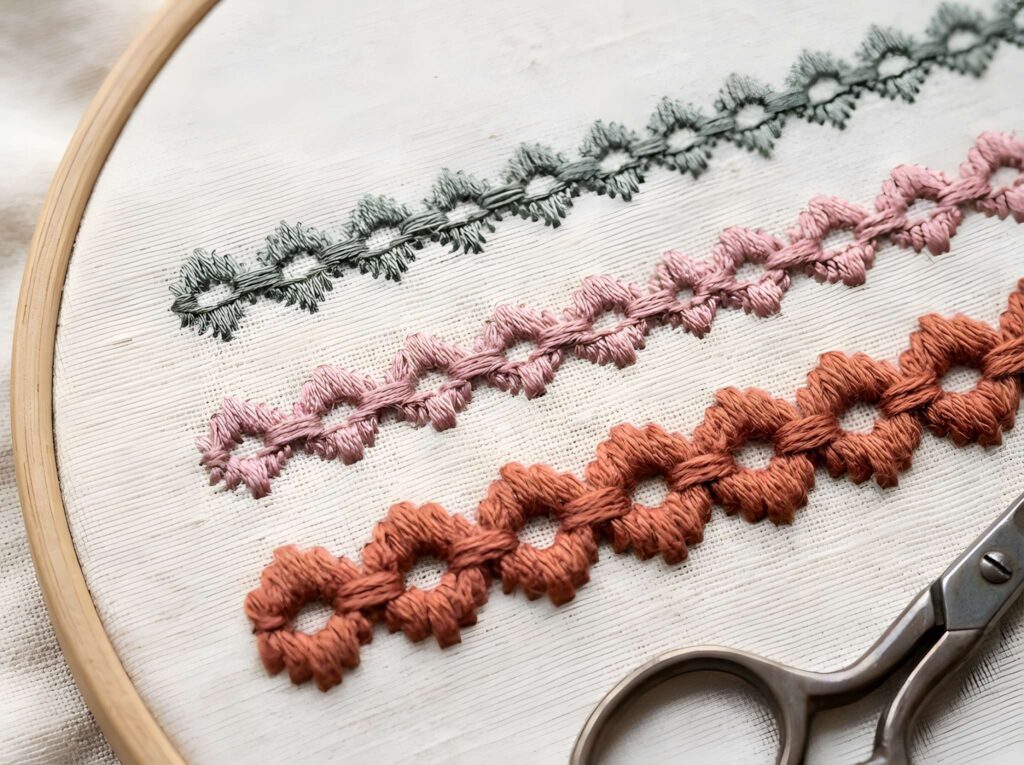
One of the most important numbers on an embroidery thread spool is its weight.
For general machine embroidery, 40 wt is the standard starting point.
Brother specifically recommends 40-weight rayon or polyester embroidery thread for multiple embroidery machine models.
40 Weight Thread
Use 40 wt for most standard embroidery designs.
It works well for:
- fills
- satin stitches
- monograms
- decorative motifs
- appliqué borders
- ordinary lettering
Many embroidery designs are digitized with standard embroidery thread in mind, which is another reason 40 wt is such a useful default.
60 Weight Thread
A thinner thread can help when stitching very fine details.
It may be useful for:
- tiny lettering
- miniature designs
- delicate details
- closely spaced stitches
Madeira, for example, describes its 60-weight rayon as an option for fine detail and small lettering.
Changing to a finer thread may require adjustments to the needle, tension, or even the way the design was digitized.
30 Weight Thread
Thirty-weight thread is thicker than the standard 40 wt.
It can create:
- bolder outlines
- fuller decorative stitching
- stronger visual texture
However, simply replacing 40 wt thread with a substantially heavier thread is not always appropriate.
Thicker thread takes up more physical space, so stitch density and needle size may need to change as well.
What Thread Should You Use in the Bobbin?
Your bobbin does not normally need to use the same decorative thread as the top of the machine.
Machine embroidery commonly uses lightweight bobbin thread.
The exact recommended weight depends on the machine.
For example, Brother specifies 90 wt cotton or spun polyester bobbin thread for certain embroidery-only machines, while some combination sewing-and-embroidery machines use 60 wt bobbin thread.
This is an important reminder that your machine manual should take priority over generic embroidery advice.
Using the correct bobbin thread helps produce balanced stitches while keeping the back of the embroidery relatively lightweight.
Prewound embroidery bobbins can also be convenient, provided they are the correct size and type for your machine.
Best Machine Embroidery Thread by Project
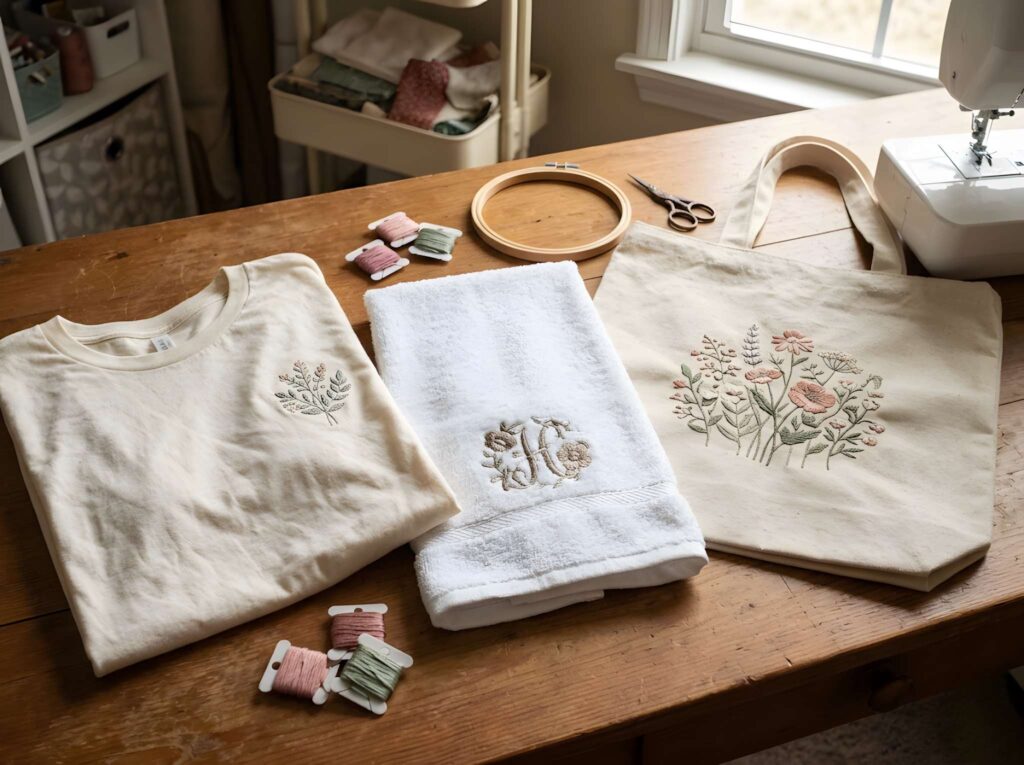
Different projects place different demands on thread.
| Project | Good Starting Thread |
|---|---|
| T-shirts | 40 wt polyester |
| Sweatshirts | 40 wt polyester |
| Towels | 40 wt polyester |
| Denim | Polyester or rayon |
| Tote bags | 40 wt polyester |
| Baby items | Durable polyester |
| Decorative pillows | Polyester or rayon |
| Monograms | Polyester or rayon |
| Fine lettering | 50–60 wt thread when digitized appropriately |
| Christmas accents | Polyester + metallic accents |
| Vintage embroidery | Cotton embroidery thread |
| Patches | Durable polyester |
Singer’s embroidery reference guide similarly recommends polyester for towels and polyester or rayon for several materials including fleece, denim, and heavier fabrics.
If you enjoy making compact projects, our collection of 4×4 machine embroidery projects includes key fobs, pouches, coasters, appliqué projects, and other ideas where thread choice can noticeably change the finished look.
Polyester is particularly practical for projects such as bags and key fobs because they are frequently handled.
Match Your Thread, Needle, and Stabilizer
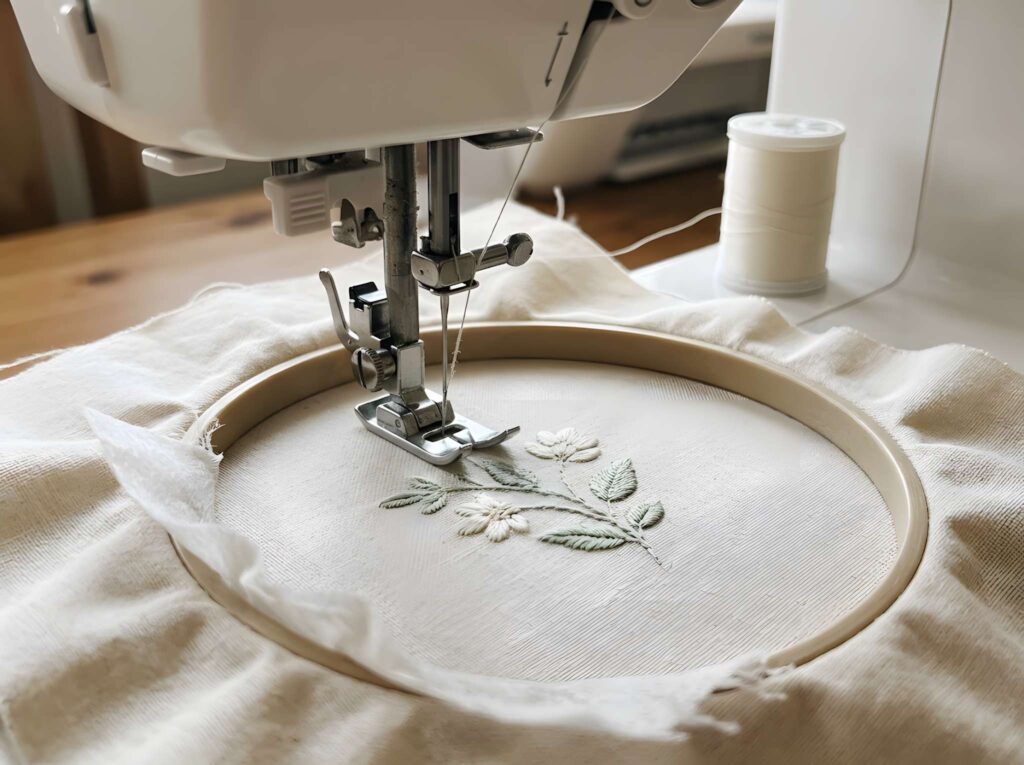
Thread does not work alone.
Successful machine embroidery depends on the combination of:
thread + needle + fabric + stabilizer + design
A perfectly good thread can still break if the needle is damaged, incorrectly sized, or unsuitable for the thread.
Likewise, even excellent embroidery thread cannot prevent puckering if a stretchy fabric is inadequately stabilized.
When using a standard 40 wt polyester or rayon thread, many projects work well with an embroidery needle around size 75/11, although the correct needle depends on the fabric, design, machine, and thread manufacturer.
Always follow the thread manufacturer’s recommendations when using unusual thread sizes.
The same principle applies when using detailed machine embroidery patch designs. A dense patch on denim has very different requirements from a small lightweight design stitched on a T-shirt.
Why Does Machine Embroidery Thread Keep Breaking?
Thread breaks are not always caused by bad thread.
Before replacing the spool, check the entire setup.
Common causes include:
- Incorrect threading
Rethread the machine completely according to the manufacturer’s threading path. - Damaged or dull needle
Replace the needle, particularly after long or dense embroidery sessions. - Incorrect needle size
Specialty and heavier threads may require a larger eye. - Too much upper tension
Excessive tension can increase stress on the thread. - Old or damaged thread
Thread that has been stored poorly can become less reliable. - Incorrect thread weight
A design may not stitch properly when a drastically different thread thickness is substituted. - Machine stitching too fast
Metallic and specialty threads often behave better at reduced speeds. - Needle or thread path obstruction
Check that the spool unwinds freely and is not catching around the spool cap or stand.
Brother notes that improper upper threading can lead to breaking or tangling, so rethreading is one of the first troubleshooting steps worth trying.
Can You Use Regular Sewing Thread for Machine Embroidery?
You may occasionally be able to sew a design with ordinary sewing thread, but that does not make it the best choice.
Machine embroidery thread is designed to create the appearance, coverage, and performance expected from embroidered designs.
Embroidery machines can place thousands of stitches into a relatively small area. Thread that works perfectly for constructing a seam is not necessarily optimized for that job.
For predictable results, use thread labeled for machine embroidery.
What Thread to Use for Machine Embroidery: Final Recommendation
If you are wondering what thread to use for machine embroidery and simply want the safest place to begin, buy a good-quality 40 wt polyester machine embroidery thread.
Use it while learning your machine and then expand your collection as different projects require it.
Choose:
- Polyester for durability and everyday embroidery.
- Rayon for extra shine and decorative work.
- Cotton for a matte, traditional look.
- Metallic thread for sparkling decorative accents.
- Fine thread for small details when the design supports it.
- Heavier thread when the project is digitized for a bolder appearance.
Most importantly, check your embroidery machine manual before changing thread weight or bobbin thread.
Once your basic thread setup is working reliably, you can spend less time troubleshooting and more time experimenting with embroidery files, fonts, appliqué, patches, and personalized projects.
Easy Machine Embroidery Projects to Try With Different Threads
One of the easiest ways to understand embroidery thread is to compare the same kind of project using different materials.
Start with a small floral design stitched in polyester, then try a decorative monogram in rayon. Once you’re comfortable, experiment with a metallic accent or a matte cotton finish.
Explore more machine embroidery patterns and project ideas to find designs that suit your skill level and preferred style.

Whichever design you choose, make a test stitch-out first. This helps you evaluate thread coverage, color combinations, tension, and the overall appearance before working on your final fabric.
Frequently Asked Questions
What is the best thread for machine embroidery beginners?
For most beginners, 40 wt polyester machine embroidery thread is the easiest starting point. It is strong, versatile, widely available, and appropriate for many everyday projects.
Is 40 or 60 weight thread better for machine embroidery?
Neither is universally better. Forty-weight thread is the standard choice for general embroidery. Sixty-weight thread is thinner and can be useful for fine lettering and detailed designs that are digitized for finer thread.
Is rayon or polyester better for machine embroidery?
Choose polyester when durability and frequent washing are priorities. Choose rayon when you want a particularly smooth, lustrous decorative finish.
Can I use cotton thread in an embroidery machine?
Yes, when you use suitable machine embroidery cotton and the design and machine setup accommodate it. Cotton provides a softer, matte appearance compared with polyester or rayon.
What thread should I use for embroidering towels?
A durable 40 wt polyester embroidery thread is a good starting point for towels because towels are frequently washed. Textured towels may also need appropriate stabilization and a water-soluble topper.
What thread should I use for embroidered shirts?
Forty-weight polyester machine embroidery thread is a versatile choice for most shirts and sweatshirts. The stabilizer and needle should also be selected according to the fabric.
Do embroidery machines need special bobbin thread?
Machine embroidery usually uses lightweight bobbin thread rather than the decorative top thread. Follow your machine manual because recommended bobbin thread weights differ between machines.
Can I mix different embroidery thread brands?
Usually, yes, but threads can behave differently even when the listed weight is the same. If you change brands or thread types and stitch quality changes, test the design and check tension before embroidering the final item.