
ℹ️ Affiliate Disclosure: This article may contain affiliate links. If you book or purchase through these links, we may earn a commission at no additional cost to you.
Explore Wedding Veil Embroidery Ideas for a Personalized Bridal Look
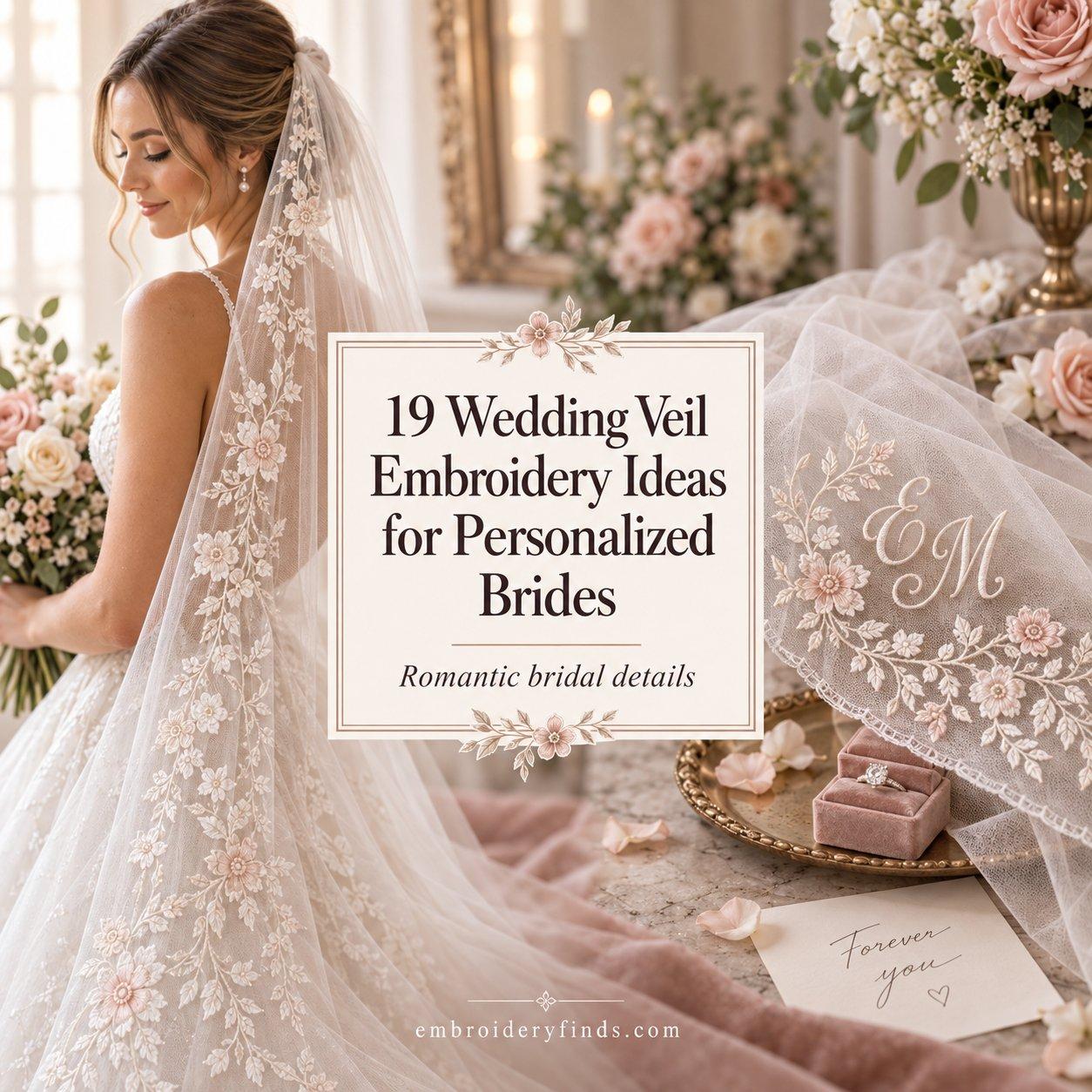
A plain veil can look elegant on its own, but wedding veil embroidery gives you a way to make the piece feel unmistakably personal. The challenge is choosing decoration that adds meaning without making sheer tulle look crowded or visually heavy. A tiny monogram creates a very different effect from a floral border, while a wedding symbol placed near the lower edge can become a subtle detail that only appears as the veil moves.
The ideas below cover delicate botanical borders, corner florals, personalized lettering, wedding monograms, small symbolic motifs, and a few more decorative statement options. Some designs naturally suit lighter placements, while larger or denser motifs make more sense as inspiration for the lower portion of a veil rather than directly beside the face.
A broader range of wedding embroidery designs exists, so this shortlist concentrates on motifs that can create clearly different personalized looks for bridal veils.
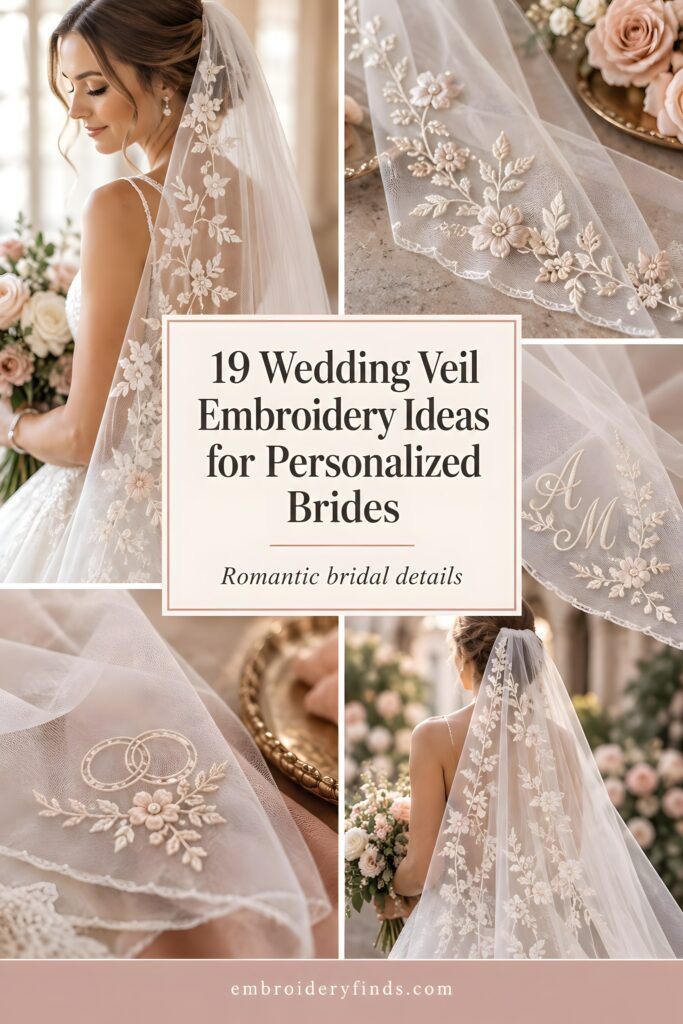
The most useful wedding veil embroidery ideas are usually delicate floral edging, small monograms, personalized wedding lettering, subtle symbolic motifs, and strategically placed corner designs. Lightweight-looking linework works well when you want embroidery to disappear into the veil from a distance, while larger botanical or ornamental designs make more sense when the embroidered section is intended to become a visible feature.
Quick Picks
For a veil-specific motif: Beautiful Bridal Veil Design — a compact bridal design when you want the embroidery itself to reference the veil and wedding day.
For personalization: Wedding Monogram — a single-color monogram style that can create a discreet personalized focal point.
For delicate edging: Wildflower Border Embroidery Design — a narrow botanical border suited to an airy floral look along a hem.
For romantic floral corners: Wedding Spring Floral Corner — useful when you prefer concentrated flowers instead of embroidery around the entire veil.
For a subtle wedding symbol: Wedding Rings Embroidery Design — a compact ring motif that can work as a small hidden or lower-edge detail.
Wedding Veil Embroidery Ideas for Different Bridal Styles
1. Beautiful Bridal Veil Design
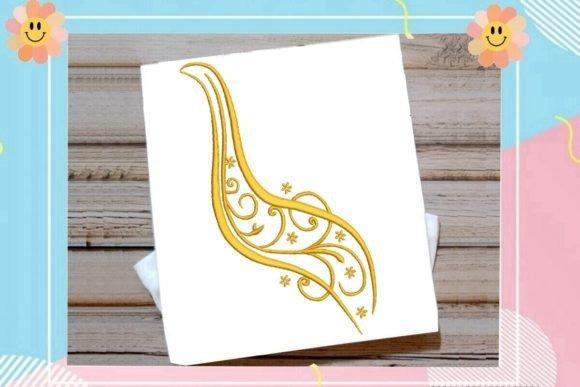
Beautiful Bridal Veil Design is a compact one-color bridal motif that makes sense when you want the embroidery to reference the wedding itself without covering a large section of tulle. Its small footprint makes it easier to imagine near a lower corner, beside personalized initials, or as a discreet detail hidden within a longer veil.
This approach works particularly well for brides who prefer one meaningful accent instead of a full decorative border. If the goal is dramatic floral edging, however, a repeating botanical design will create a stronger visual effect.
2. Wedding Monogram
Wedding Monogram offers a classic personalized direction for a bride who wants the veil to feel custom without turning it into a heavily decorated accessory. The design uses a single color and has a relatively narrow shape, which suits a small focal placement near the bottom or side of the veil.
A monogram also pairs naturally with a date or tiny floral accent added separately. Choose this direction when personalization matters more than ornamentation. For a softer garden-inspired look, one of the floral corners below will blend more naturally with botanical wedding styling.
3. Mr and Mrs Split Monogram Embroidery
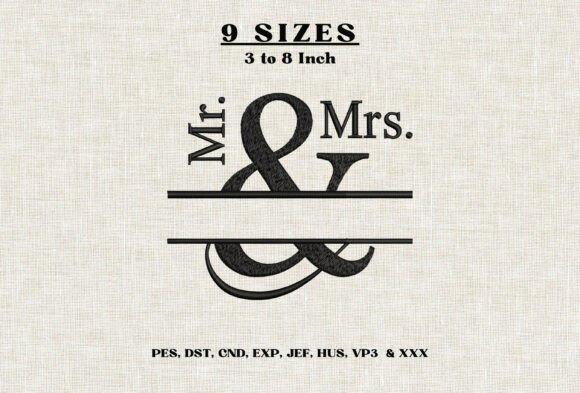
Mr and Mrs Split Monogram Embroidery creates a more explicit personalized statement, with open space that can be used for a surname, initials, wedding date, or other custom text. It suits brides who want their veil embroidery to function almost like a stitched wedding keepsake.
Because this concept can become visually prominent, placement matters. It makes more sense near the train end or lower back portion of a longer veil than directly beside the face. For a quieter monogram effect, the simpler Wedding Monogram above is easier to keep understated.
4. The Wedding Monogram Lettering
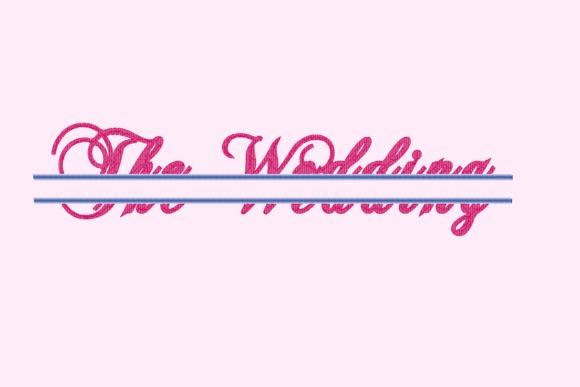
The Wedding Monogram Lettering has an elongated lettering format that suggests a completely different veil treatment from a compact crest or floral motif. It is worth considering for a lower hem placement where horizontal embroidery can follow the visual direction of the veil.
The lettering has a more decorative, vintage-leaning personality, so it fits traditional or romantic bridal styling better than a minimalist ceremony. If you want personalization to remain nearly invisible until someone looks closely, a smaller monogram or ring motif will be easier to keep subtle.
See Wedding Monogram Lettering
5. Wedding Spring Floral Corner
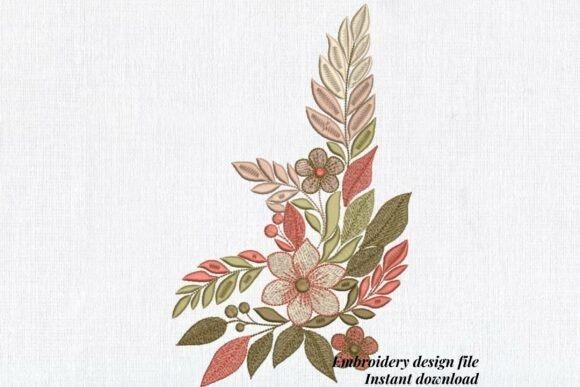
Wedding Spring Floral Corner uses layered leaves and soft blossoms arranged as a concentrated corner composition. That makes it useful for a bride who likes floral embroidery but does not want flowers running around the entire veil edge.
One or two corner placements can create a framed effect while leaving most of the tulle untouched. The design is available in several sizes, giving more placement flexibility than a fixed long border. For a continuous meadow effect instead, the Wildflower Border options below are better aligned with that look.
6. Wildflower Border Embroidery Design
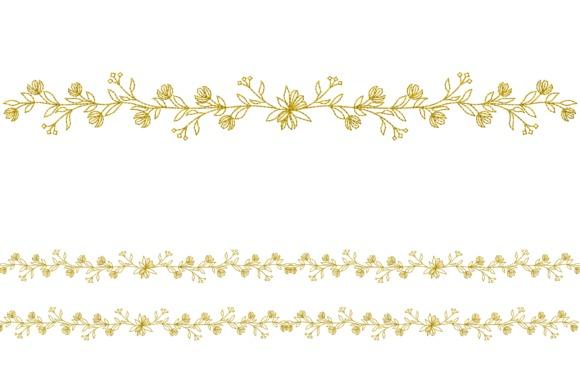
Wildflower Border Embroidery Design is a narrow repeating botanical pattern with leafy branches, small flowers, and buds. Its long, low profile makes it especially interesting as inspiration for a lightly embroidered veil hem rather than a large isolated centerpiece.
The botanical rhythm suits garden weddings, outdoor ceremonies, and dresses with understated floral details. Keeping the thread close to the veil color can make the border textural rather than colorful. If you prefer separate clusters that leave more open tulle between motifs, a floral corner design offers more breathing room.
7. Wildflower Border Meadow
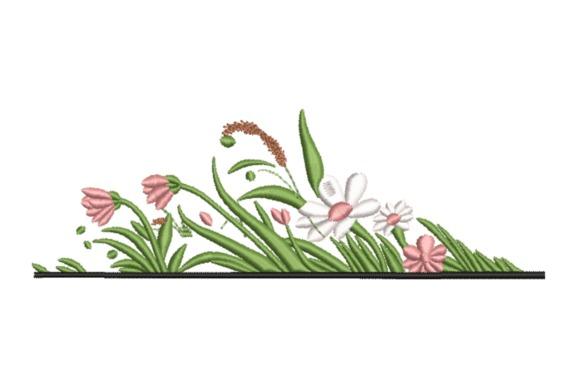
Wildflower Border Meadow creates the impression of a small floral meadow rather than a formal ornamental band. It works as an idea for brides who want the bottom of the veil to feel organic, relaxed, and slightly less symmetrical.
The design comes in several sizes, which makes it easier to think in terms of alternating clusters rather than one uninterrupted border. It pairs naturally with rustic, botanical, and outdoor wedding styling. For a more formal or vintage appearance, the scroll-based Floral Wedding Border Blue provides a more structured alternative.
8. Floral Wedding Border Blue
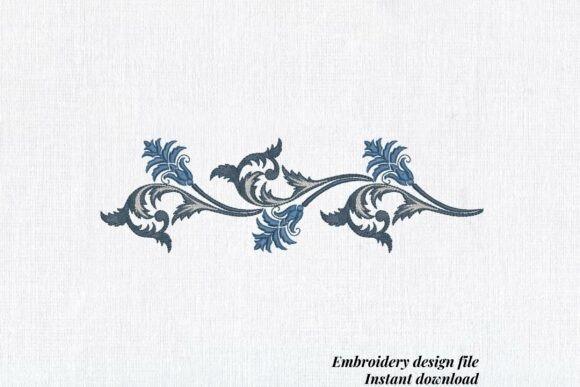
Floral Wedding Border Blue combines floral elements with flowing ornamental scrollwork, giving it a more formal appearance than the loose wildflower borders. This is the direction to consider when the veil is meant to echo an ornate gown, vintage ceremony details, or a traditional romantic aesthetic.
The design can also inspire a subtle “something blue” treatment if selected elements are stitched in muted blue thread. Its decorative character may be too strong for a very minimal dress, where a one-color border or small monogram would create a cleaner balance.
9. Floral Border Design
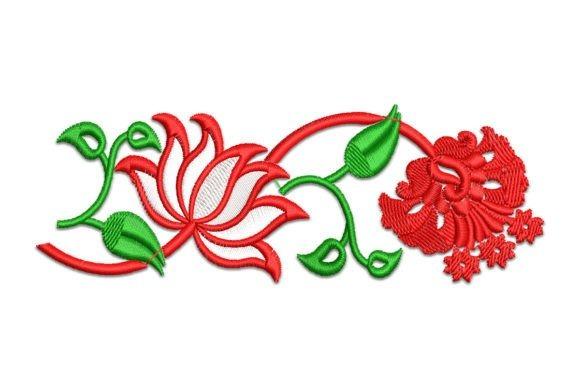
Floral Border Design offers several layouts and sizes, making it useful when you want to experiment with how a floral element follows the edge of the veil. Compared with a fixed corner motif, the border format creates a more continuous decorative rhythm.
This is better suited to a visibly embroidered veil than a nearly plain one. On very light tulle, test the chosen size before committing to the full hem, since a decorative border can change the way the edge hangs. For a narrower, airier concept, the AliEmbroidery Floral Border below is less visually expansive.
10. Floral Border by AliEmbroidery
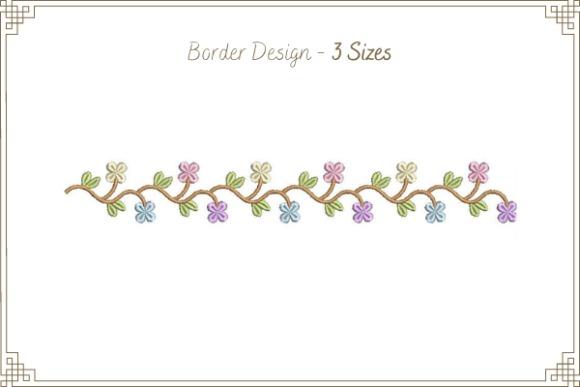
This Floral Border has a relatively narrow rectangular layout that lends itself to smaller edge sections and repeated placements. It is an appealing concept for brides who want recognizable flowers while keeping plenty of open space in the veil.
Repeating a compact border section can also give you more control over spacing than committing to one very long embroidery file. Consider this approach for fingertip or chapel-length veils where a full ornate border could feel visually heavy. A cathedral-length veil can usually support a more substantial lower-edge treatment.
11. Floral Border by Sangitha GT
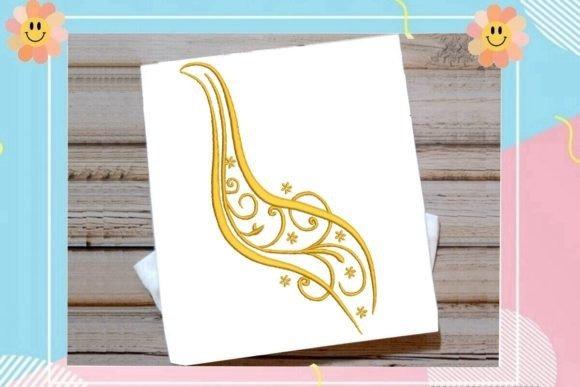
This long Floral Border is designed as an endless-style border, which makes it useful inspiration for brides picturing flowers flowing continuously along the veil hem. The horizontal composition is very different from scattered individual blossoms and creates a deliberate framed finish.
A continuous border requires more careful planning around joins, curves, and overall veil shape, so it is better suited to a project where the embroidered edge is a major feature. If you want fewer alignment points, isolated floral corners or small repeated motifs may be easier to position.
12. Creative Border
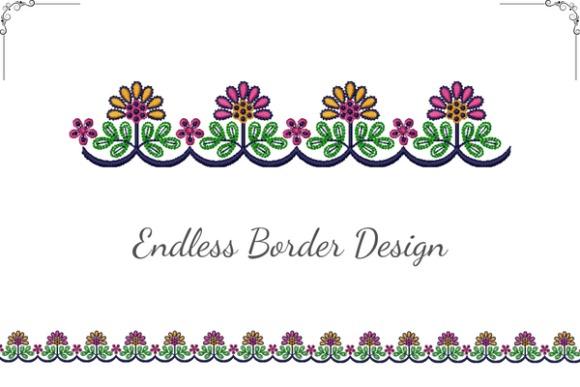
Creative Border has a particularly slim profile, making it worth considering when you like the idea of embroidered edging but do not want large flowers extending far into the veil. A narrow band can define the outline while preserving the transparent, floating character of the fabric.
This type of restrained border makes sense with dresses that already include lace, beading, or dimensional appliqué. The veil can repeat the decorative mood without competing with the gown. If the dress itself is minimalist, a larger wildflower or ornamental treatment can provide more visual interest.
13. Floral Corner Embroidery Design
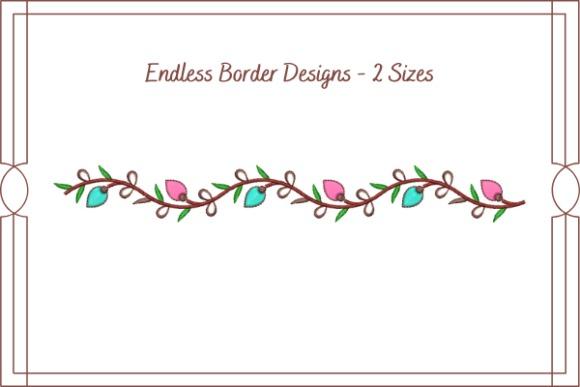
Floral Corner Embroidery Design uses a larger corner composition, making it an option for creating one intentional botanical focal point rather than decorating every edge. On a veil, that concept can translate well to one lower corner or mirrored placements near the train.
The design has enough presence to be seen in photographs, so it fits brides who want embroidery to read clearly rather than disappear into the tulle. Its larger embroidery area also means it deserves careful fabric testing. For something lighter in appearance, use a smaller corner or narrow border instead.
14. Floral Corner by Embroidize
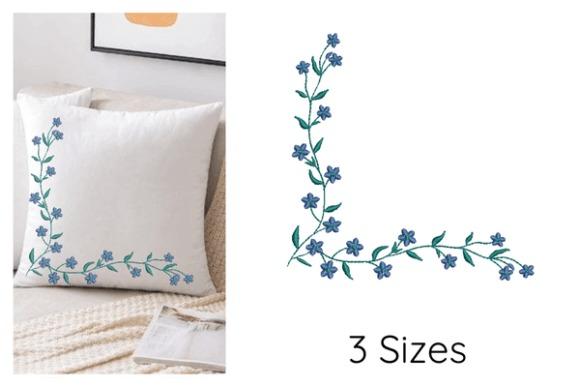
This Floral Corner uses smooth floral shaping and is available in multiple sizes, which gives you more freedom to choose between a small accent and a noticeable botanical statement. It works particularly well as an idea for asymmetrical veil personalization.
Instead of repeating the motif evenly, consider concentrating embroidery toward one side of the lower veil and leaving the opposite side open. That creates a more modern composition. Brides seeking strict symmetry or a traditional framed edge may prefer one of the repeating borders instead.
15. Lace Filet Border
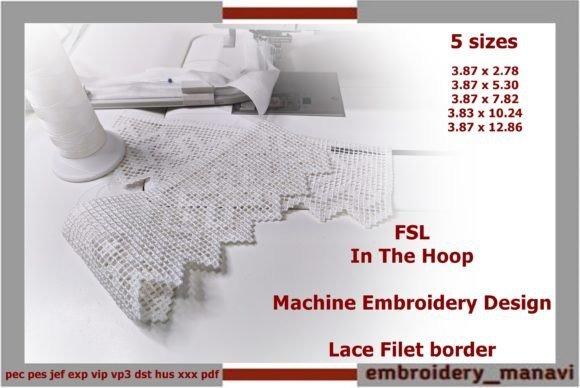
Lace Filet Border provides a more textile-focused alternative to recognizable flowers or wedding symbols. It suits a bride who wants the veil edge to resemble lace trim while still working from an embroidery design rather than adding a separate premade lace band.
This is one of the more substantial concepts in the roundup, with multiple border lengths available. Treat it as an option for a clearly decorative hem rather than an invisible accent. Because lace-like embroidery can involve considerably more stitching than sparse linework, sampling on comparable sheer fabric is especially important.
16. Wedding Rings Embroidery Design
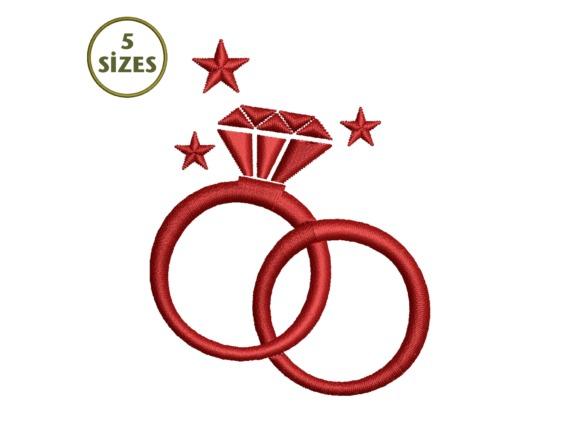
Wedding Rings Embroidery Design is a compact wedding symbol that can add meaning without requiring an entire floral composition. Its relatively small dimensions make it easier to imagine as a single lower-edge accent, a detail near initials, or a hidden motif incorporated into a larger personalized arrangement.
The rings create a literal wedding reference, so this option suits sentimental personalization more than purely decorative styling. If you would rather keep the veil timeless and non-figurative, flowers, leaves, or monogram lettering may blend more naturally with the overall bridal look.
17. Custom Wedding Rings
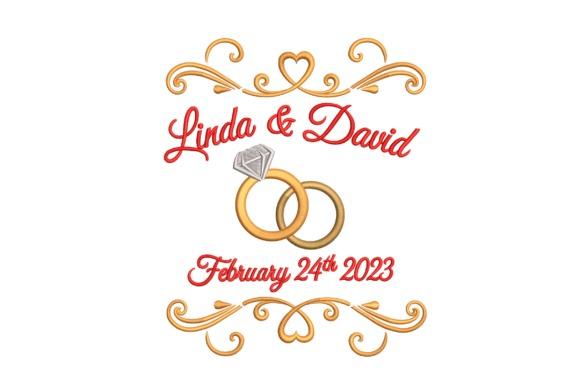
Custom Wedding Rings combines a wedding-ring theme with a more personalized decorative direction. It is a useful idea when you want the veil to include a recognizable symbol of the ceremony rather than relying only on flowers or initials.
This approach can work well near a wedding date or surname, creating a small stitched keepsake within the veil. Because symbolic motifs attract attention more quickly than subtle botanical linework, keep the surrounding decoration restrained if you want the result to remain elegant rather than busy.
18. Bride Silhouette in Wedding
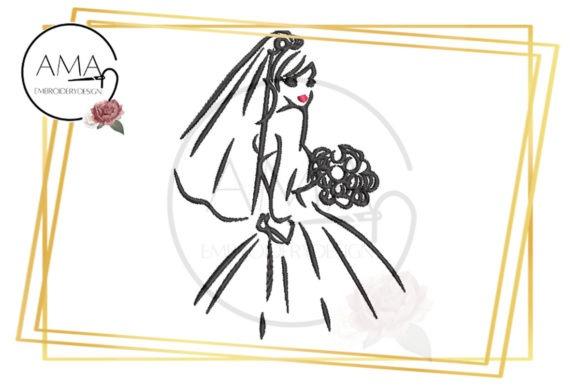
Bride Silhouette in Wedding introduces a figurative element rather than a border, monogram, or floral decoration. This can be a charming choice for a bride who wants an unmistakably bridal motif hidden near the bottom of the veil or incorporated into a commemorative section.
The silhouette makes a stronger thematic statement than abstract flowers, so it works best when the personalized detail itself is part of the story. For a veil intended to be worn with many different accessories and remain visually classic, a monogram or botanical motif is easier to integrate.
19. Wedding Embroidery Design
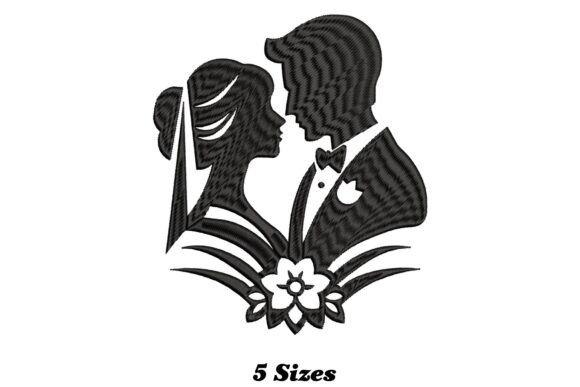
Wedding Embroidery Design is a single-color wedding motif available in several sizes, making it a flexible finishing idea when you want visible wedding symbolism without introducing a multicolor floral palette. A tone-on-tone thread treatment could keep the design subtle while still adding stitched texture.
The multiple sizes make it easier to compare a small hidden detail with a larger statement placement before committing. This is better suited to a symbolic wedding accent than a naturalistic garden veil. If flowers are central to the bridal look, the spring corner or wildflower borders will feel more connected to that styling.
| Product | Best for | Style / Type | Project Fit |
|---|---|---|---|
| Beautiful Bridal Veil Design | Small bridal accent | Single-color bridal motif | Corner or hidden detail |
| Wedding Monogram | Personal initials | Classic monogram | Lower veil personalization |
| Mr and Mrs Split Monogram | Names or wedding date | Split monogram | Statement personalization |
| Wedding Monogram Lettering | Horizontal lettering | Vintage-inspired text | Lower hem placement |
| Wedding Spring Floral Corner | Romantic floral accent | Botanical corner | One or two focal areas |
| Wildflower Border | Delicate floral edging | Narrow botanical border | Veil hem |
| Wildflower Border Meadow | Garden-style veil | Loose wildflower border | Lower edge clusters |
| Floral Wedding Border Blue | Formal floral styling | Ornamental floral border | Statement hem |
| Floral Border Design | Decorative edging | Floral border | Visible embroidered edge |
| Floral Border by AliEmbroidery | Compact edging | Narrow floral motif | Repeated placements |
| Floral Border by Sangitha GT | Continuous flowers | Endless border | Full lower hem |
| Creative Border | Restrained trim | Slim continuous border | Subtle veil outline |
| Floral Corner Embroidery Design | Large floral focal point | Botanical corner | Train or lower corner |
| Floral Corner by Embroidize | Asymmetrical flowers | Soft floral corner | Modern focal placement |
| Lace Filet Border | Lace-inspired edging | Decorative lace border | Statement hem |
| Wedding Rings Embroidery Design | Small wedding symbol | Ring motif | Hidden or paired accent |
| Custom Wedding Rings | Sentimental personalization | Wedding-ring motif | Date or name pairing |
| Bride Silhouette in Wedding | Bridal keepsake detail | Figurative motif | Lower veil accent |
| Wedding Embroidery Design | Simple wedding motif | Single-color design | Subtle symbolic accent |
How to Plan Embroidery on Delicate Bridal Tulle
Start by deciding what you want someone to notice first. If the dress has intricate lace, beading, or dimensional flowers, the veil usually benefits from quieter embroidery. A small monogram or narrow border can repeat the handmade quality without competing with the gown. With a minimalist dress, the veil has more room to become the decorative focal point.
Placement affects the result as much as the design. Embroidery close to the face can become visually distracting in portraits, while decoration concentrated toward the lower third of a long veil tends to preserve transparency around the head and shoulders. A single lower corner feels modern and asymmetrical. Mirrored corners look more formal. Repeating motifs create movement, and a continuous border produces the strongest framed effect.
Think about scale before adding more detail. Small designs can often be spaced with generous areas of untouched tulle between them. Larger corner and border designs need enough surrounding space to remain readable. Avoid filling every available area simply because the veil is large.
Thread color changes the personality of the same motif. White or ivory thread keeps embroidery connected to the veil itself. A muted pastel can introduce a personal wedding color. A tiny blue flower or monogram can become a subtle interpretation of “something blue” without turning the whole veil colorful.
Most importantly, treat sheer bridal fabric as its own test project. A file that stitches beautifully on linen, cotton, or a towel may behave differently on fine tulle. Stitch the intended design at the intended size on comparable fabric first. Evaluate distortion, puckering, stiffness, thread coverage, stabilizer removal, and how the finished sample hangs before using the actual veil.
Before Embroidering the Actual Veil
- Test the exact design, thread, stabilizer, and fabric combination on spare tulle first.
- Check the embroidery dimensions instead of judging scale from the product preview alone.
- Place heavier decoration farther from the face and crown when possible.
- Mark repeated motifs carefully so spacing stays intentional around curves.
- Compare the embroidery with the dress before committing to a full border.
- Avoid resizing machine embroidery files beyond what the design supports unless you know the stitch file can be safely adjusted.
Which Wedding Veil Embroidery Style Fits Your Look?
If you want the personalization to stay understated, Wedding Monogram or Wedding Rings Embroidery Design gives you a defined focal detail without requiring a full embroidered edge.
For a romantic botanical veil, Wildflower Border Embroidery Design makes sense when you want flowers running along the hem, while Wedding Spring Floral Corner is better suited to concentrated floral accents with more untouched tulle around them.
If the veil itself should be one of the statement pieces of the bridal look, Floral Wedding Border Blue or Lace Filet Border provides a more decorative direction. The final choice should balance the gown, veil length, embroidery placement, and how much visual weight the sheer fabric can comfortably carry.
Frequently Asked Questions
What embroidery looks good on a wedding veil?
Delicate floral borders, small monograms, wedding dates, botanical corners, and compact symbolic motifs work especially well as wedding veil embroidery ideas. The right choice depends on the veil length and the amount of decoration already present on the dress. A minimalist gown can support a more visible embroidered hem, while an ornate dress often pairs more naturally with a small tone-on-tone detail.
Can you machine embroider directly on bridal tulle?
Machine embroidery can be used on some bridal tulle, but the fabric, design density, stabilizer, hooping method, and machine setup all affect the result. A design that works on ordinary fabric is not automatically suitable for sheer tulle. Stitch a complete sample on comparable fabric before working on the actual veil and check for puckering, distortion, stiffness, and visible stabilizer.
Where should personalized embroidery go on a wedding veil?
Personalized embroidery is commonly easiest to integrate near the lower edge, train, or one lower corner of a wedding veil. These placements keep names, initials, dates, or symbols away from the face while allowing them to appear in full-length photographs. Small motifs can also be scattered or hidden within a floral arrangement when the bride wants the personalization to feel more private.
Should veil embroidery match the wedding dress exactly?
Veil embroidery does not need to duplicate the wedding dress exactly, but the two pieces should share enough visual language to feel intentional together. A lace-heavy gown may pair better with restrained embroidery, while a clean dress can support a more decorative floral border. Compare motif scale, thread color, floral style, and overall density before choosing the final veil design.