
ℹ️ Affiliate Disclosure: This article may contain affiliate links. If you book or purchase through these links, we may earn a commission at no additional cost to you.
Explore Wedding Dress Embroidery Ideas to Enhance Bridal Details
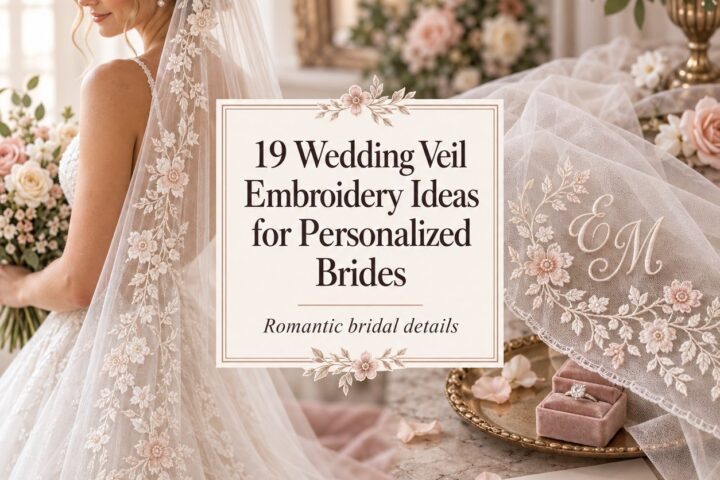
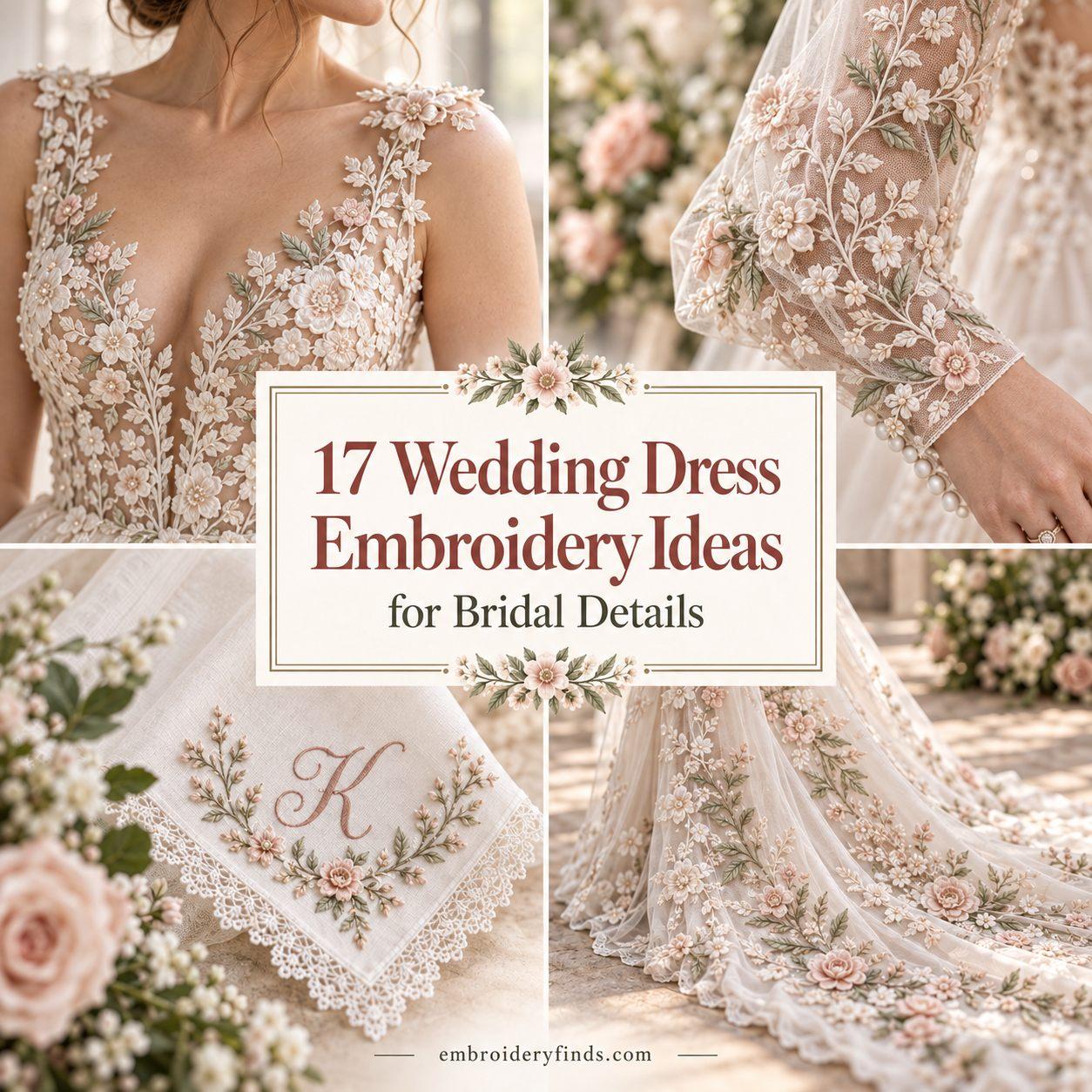
Wedding dress embroidery can change the look of a gown without covering it in decoration from neckline to hem. A small floral corner near the waist, a trailing rose on a sleeve, or a delicate monogram hidden inside the skirt can feel far more intentional than filling every open space. The main challenge is choosing embroidery that works with the dress silhouette, fabric, and placement rather than simply choosing a motif because it looks bridal.
The ideas below range from airy botanical accents and romantic roses to monograms, lace-inspired details, and more decorative focal motifs. Some make sense as subtle additions around cuffs and bodices, while others have enough visual weight for skirts, trains, or statement panels.
A much broader range of bridal embroidery exists, so this shortlist focuses on designs that can create clearly different details, placements, and finished looks on a wedding dress.
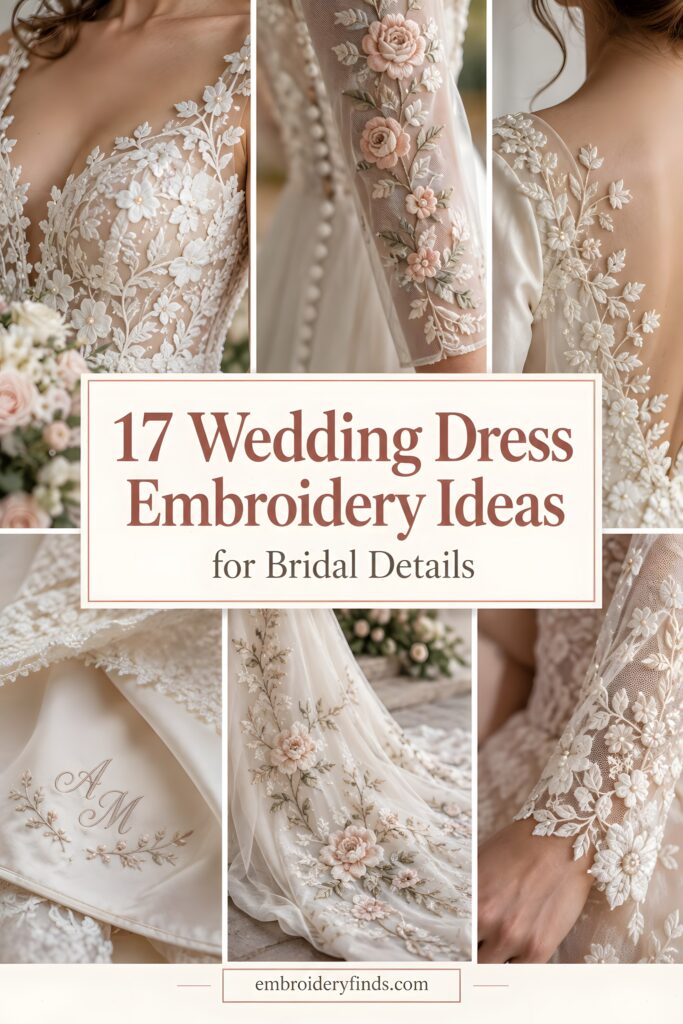
The most useful wedding dress embroidery ideas include curved florals for necklines and waist seams, corner motifs for bodice-to-skirt transitions, narrow roses for sleeves, and monograms for personalized hidden details. Larger botanical motifs work better when embroidery is meant to become a focal point, while lighter line-based designs make more sense when the dress itself should remain visually dominant
Quick Picks
For a soft botanical corner: Wedding Spring Floral Corner — its angled composition can follow seams and transition areas without requiring a full embroidered panel.
For romantic personalization: Wedding Monogram — a compact single-color motif that suits discreet initials and personalized bridal details.
For narrow floral placement: Rose — the vertical proportions make it useful for sleeves, side details, or an elongated bodice accent.
For a larger statement: Floral Branch Machine Embroidery Design — a sweeping botanical motif with enough scale for a skirt, train, or larger bridal panel.
For lace-inspired romance: Lace Heart Edge Applique Design — a decorative heart motif with a scalloped edge that suits more visibly romantic bridal details.
Wedding Dress Embroidery Ideas for Different Bridal Details
1. Wedding Spring Floral Corner
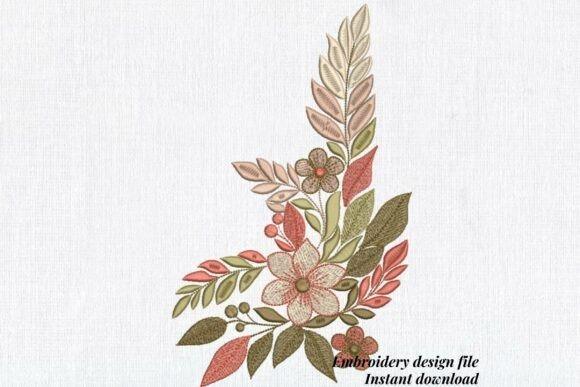
Wedding Spring Floral Corner is a delicate botanical arrangement that makes sense for areas where embroidery needs to follow the construction of the dress rather than sit in the middle of a panel. Its angled leaves and blossoms can visually grow from a waist seam, neckline edge, sleeve opening, or the beginning of a train.
The design is available in several sizes, giving it more placement flexibility than a single large motif. I would favor it for a soft garden-inspired bridal look. If the goal is an elongated accent running down a sleeve or skirt panel, one of the narrower rose designs below will be easier to position.
See Wedding Spring Floral Corner
2. Floral Wedding Frame Blue
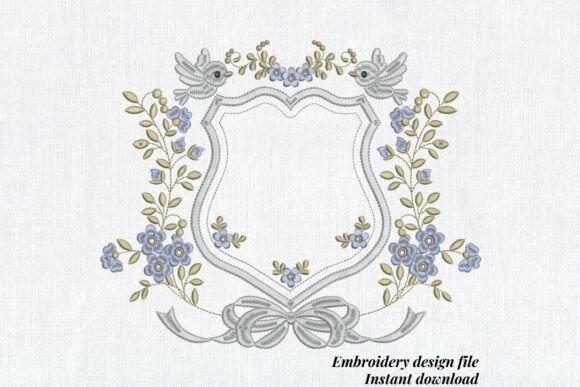
Floral Wedding Frame Blue uses pastel blossoms, greenery, and bow details to create a romantic framed composition. The arrangement has more of an heirloom bridal character than a simple isolated flower, making it useful when the embroidery itself should become a noticeable part of the gown.
The design comes in multiple sizes, so the composition could inspire anything from a smaller bodice accent to a more visible decorative panel. It makes the most sense for romantic, vintage-influenced dresses. For a cleaner modern gown, a simpler floral corner or outline rose will usually integrate more naturally.
3. Floral Branch Machine Embroidery Design
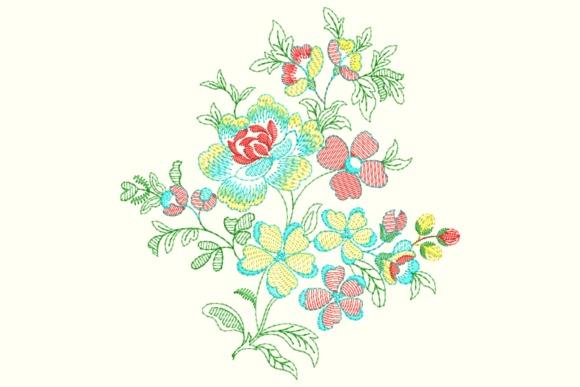
Floral Branch Machine Embroidery Design is a broad botanical motif suited to a section of the gown where there is enough uninterrupted fabric for the embroidery to breathe. Its branch-like composition can work especially well across an overskirt, lower skirt panel, train, or detachable bridal piece.
At roughly eight inches across, this is considerably more substantial than the small corner motifs in the roundup. Choose it when embroidery is supposed to be seen from a distance. For delicate sleeve or neckline work, its scale may be visually heavy, and a smaller rose or corner design makes more sense.
4. Vintage Floral Bouquet Embroidery Design
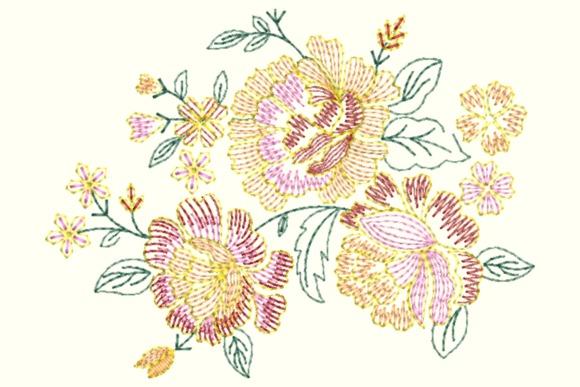
Vintage Floral Bouquet Embroidery Design creates a more traditional floral focal point than the airy corner and branch motifs. A bouquet works well when you want one recognizable composition rather than scattered flowers, particularly around a bodice panel, back detail, detachable belt area, or statement section of the skirt.
This direction suits gowns with vintage or romantic styling where floral embroidery can be deliberately decorative. I would avoid repeating a bouquet too densely across the dress; several complete motifs can quickly compete with the gown silhouette. For an all-over treatment, smaller individual flowers offer more control.
5. Wedding Monogram
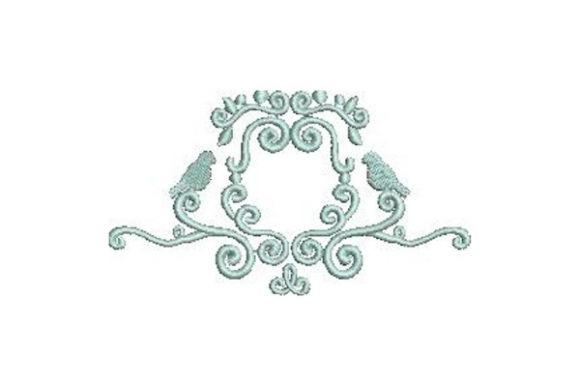
Wedding Monogram is a compact single-color embroidery design for brides who want personalization without turning initials into the main visual feature of the dress. Its narrow proportions make it easier to incorporate into an inside hem, lining, train detail, sash, or another small area reserved for a personal touch.
A monogram is particularly useful when the gown already has lace, beading, or decorative construction and another floral element would feel excessive. Choose a larger botanical motif instead when embroidery needs to contribute to the visible overall styling rather than function as a hidden keepsake detail.
6. The Wedding Monogram Lettering
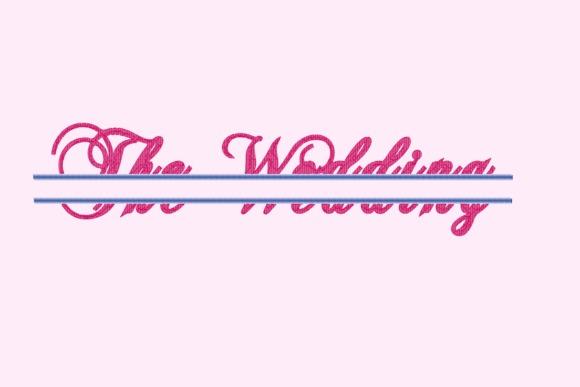
The Wedding Monogram Lettering offers a longer horizontal alternative to the compact monogram above. Its lettering-focused composition is better suited to a sash-like area, broad hem detail, detachable bridal accessory, or another placement where a narrow horizontal design fits naturally.
The vintage character works particularly well with classic and heirloom-inspired gowns. Because the motif is more explicitly wedding-themed than a decorative floral, I would use it selectively rather than repeat it. For understated personalization, the smaller Wedding Monogram leaves more freedom around the rest of the dress.
See Wedding Monogram Lettering
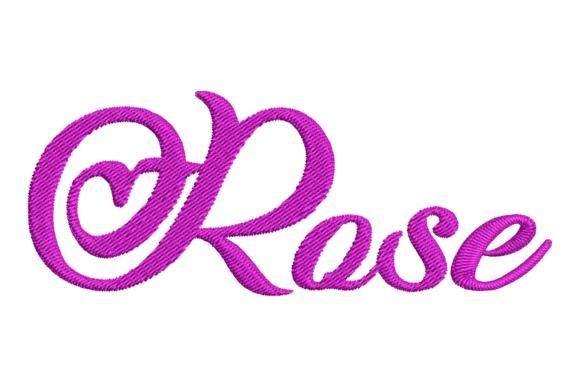
7. Rose
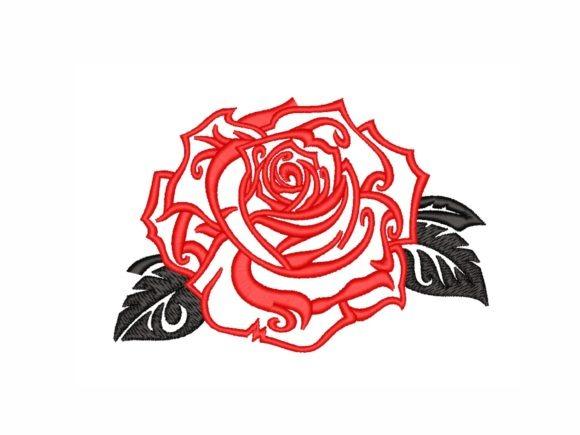
This Rose embroidery design has a slim vertical shape that is especially useful for wedding-dress areas where a round bouquet would be awkward. It can visually follow the length of a sleeve, sit beside a bodice seam, or become part of an asymmetrical floral arrangement moving down the skirt.
Multiple available sizes make the same motif easier to adapt to related bridal details. The recognizable rose gives the dress a clearly romantic appearance, but it is less subtle than abstract leaves or line florals. For minimalist styling, the outline rose later in the list is a lighter alternative.
8. Rose Floral Accent
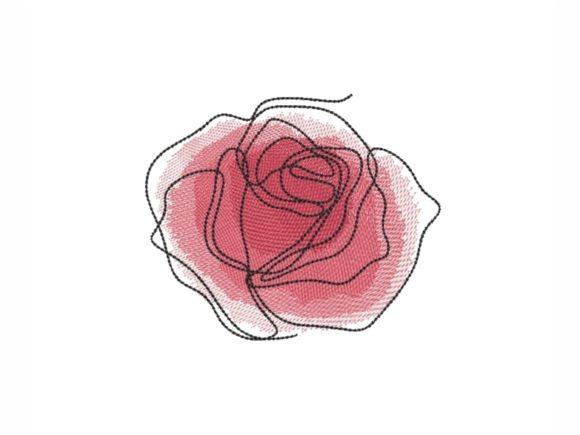
This Rose design comes in several relatively compact sizes, making it useful for repeating floral details rather than one oversized statement. Small roses can be spaced along a cuff, neckline, skirt edge, or scattered through a larger composition while leaving substantial areas of the gown untouched.
That flexibility is the main reason to choose it over a bouquet. Several placements can create movement without requiring one dense block of embroidery. If the dress needs a dramatic focal motif rather than scattered details, the Floral Branch or Vintage Floral Bouquet will create a clearer statement.
9. Classic Rose
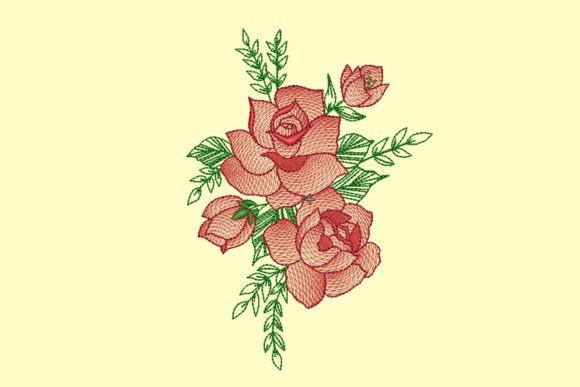
This classic Rose embroidery design offers a fuller flower shape that can stand on its own as a recognizable bridal accent. It works naturally on a bodice side, skirt panel, detachable overskirt, or back detail where one complete bloom can provide a romantic focal point.
The design is available in two noticeably different sizes, which helps when planning a primary flower and supporting placement. It suits traditional floral styling better than highly minimal gowns. If the goal is an airy botanical look rather than a prominent bloom, one of the floral corner designs will feel less concentrated.
10. Rose Outline
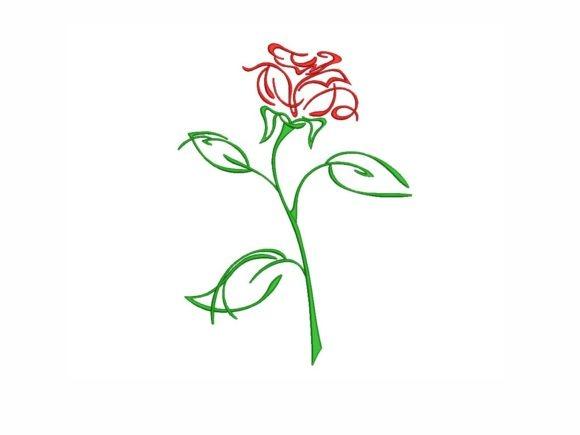
Rose Outline gives the familiar bridal rose a more open, contemporary appearance. Instead of relying on a compact filled flower, its outlined construction creates a lighter visual impression that can suit modern wedding dresses where the embroidery should complement clean lines.
The available sizes extend into much larger dimensions, so this motif is particularly interesting for an oversized skirt or train detail. A large outline can make a statement without looking like a dense floral patch. For small cuffs or narrow sleeves, however, one of the compact roses will be easier to integrate.
11. Slender Wedding Rose
This narrow Rose embroidery design measures much taller than it is wide, giving it a useful shape for elongated bridal details. Consider it for a sleeve, narrow bodice section, side seam area, or a vertical floral trail where a round motif would interrupt the natural direction of the gown.
Its proportions are the real advantage: the motif can add a recognizable flower while preserving a sense of vertical movement. Because it is relatively narrow, it is less suited to filling a broad skirt panel on its own. Pairing or repeating narrow motifs requires more placement planning than using one large branch.
12. Corner Floral
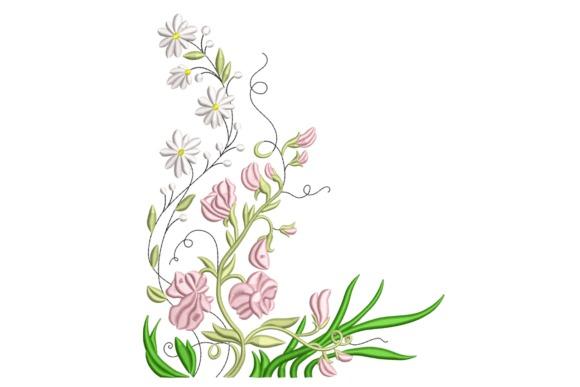
Corner Floral is a compact botanical motif designed around an angled placement, which makes it practical for bridal details that need to wrap visually around an edge. A waist seam, square or curved bodice transition, cuff, pocket detail, or beginning of a train can all benefit from this kind of composition.
At around four inches, the design is easier to treat as an accent than a dominant feature. That makes it useful for dresses where embroidery should remain restrained. If you want flowers to extend much farther across the garment, the larger floral corner and border options below provide more coverage.
13. Floral Corner with Leaves and Vines
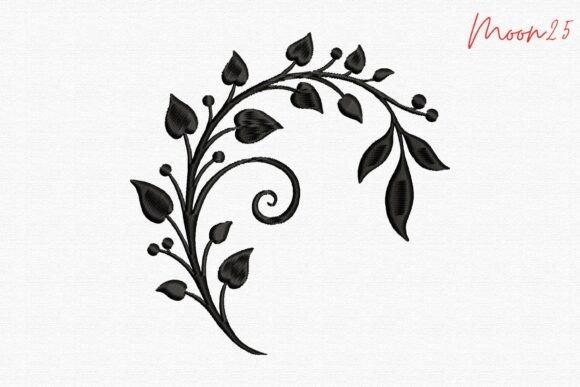
This Floral Corner combines leaves, buds, vines, and decorative curves in a monochrome-style arrangement. Compared with fuller multicolor flowers, the flowing structure can create a quieter ornamental detail around the edge of a bridal garment.
The approximately four-inch format is useful when you need a defined accent rather than broad coverage. It could make sense beside a neckline, at a sleeve edge, or where a bodice meets the skirt. Choose the Wedding Spring Floral Corner when soft blossoms are important; choose this version when flowing foliage should provide most of the visual movement.
14. Floral Corner Embroidery Design
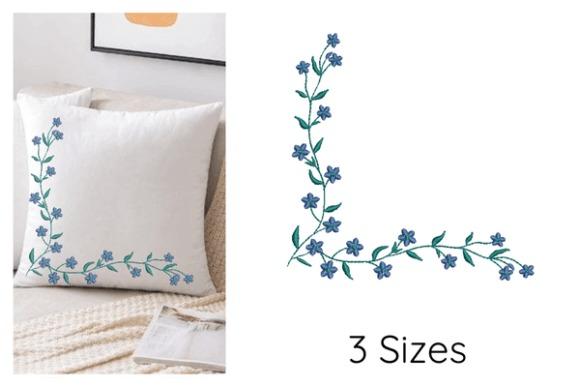
Floral Corner Embroidery Design expands the corner concept to a larger roughly six-inch composition. That extra scale makes it more suitable for an obvious bodice-to-skirt transition, a lower skirt corner, or a substantial decorative area where a small four-inch accent could disappear.
The two-color construction can also be useful when the intended bridal palette is restrained rather than highly multicolored. Because the motif occupies more space, test its position carefully before committing it to the gown. Smaller corner designs are easier to adjust around seams and existing lace placement.
15. Floral Corner Border Embroidery Design
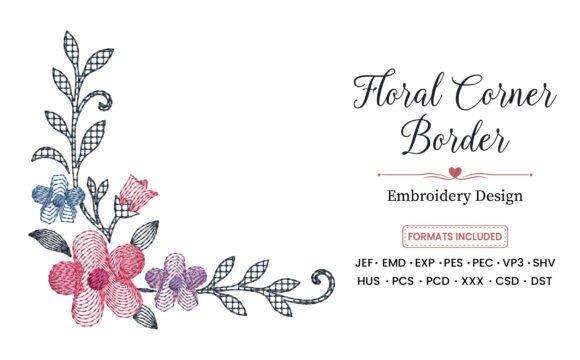
Floral Corner Border Embroidery Design combines flowers and leafy branches in a layout intended to decorate edges and corners. On a wedding dress, that structure is more adaptable to hems, train edges, neckline transitions, and other boundaries than a centered bouquet.
This is a useful direction when the embroidery should look connected to the outline of the gown. A border-based motif can guide the eye around a garment instead of creating a single isolated focal point. If you prefer scattered flowers across open fabric, individual roses will give you more freedom over spacing.
16. Lace Heart Edge Applique Design
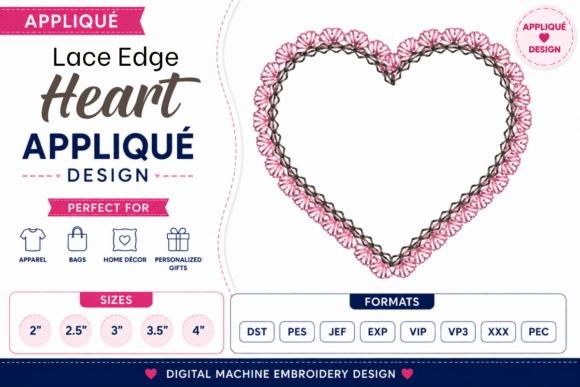
Lace Heart Edge Applique Design takes the bridal theme in a more decorative direction with a heart outline, scalloped lace-style border, and ornamental stitching. It can work when the bride wants an intentionally romantic motif rather than florals that simply blend into the dress.
Consider it for a discreet statement area, detachable accessory, overskirt detail, or personalized section rather than repeating it throughout the gown. The recognizable heart shape makes the theme obvious. For a subtler result that could pass as part of the gown’s original ornamentation, botanical corners and roses are easier to integrate.
17. Bridal Mandala
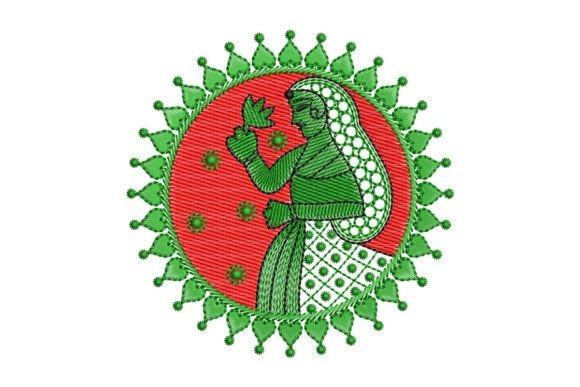
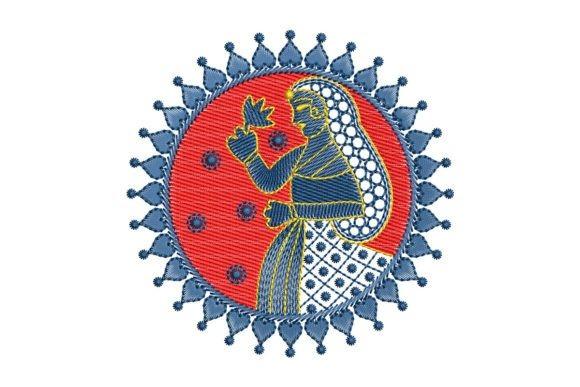
Bridal Mandala is a symmetrical circular motif for a wedding dress that needs a defined ornamental focal point rather than naturalistic flowers. Its balanced geometry can suit a centered back detail, bodice panel, waist feature, or detachable element where symmetry is part of the design.
The motif is roughly five inches square and uses three colors, so it has more visual presence than the small monograms and floral corners. Choose it when a structured decorative element complements the gown. For flowing asymmetrical dresses, a botanical branch or corner motif will usually follow the silhouette more naturally.
Wedding Dress Embroidery Comparison
| Product | Best for | Style / Type | Project Fit |
|---|---|---|---|
| Wedding Spring Floral Corner | Seam transitions | Soft botanical corner | Waist, neckline, train |
| Floral Wedding Frame Blue | Romantic statement details | Floral frame | Bodice or decorative panel |
| Floral Branch | Large botanical accents | Wide floral branch | Skirt, train, overskirt |
| Vintage Floral Bouquet | Traditional bridal florals | Bouquet | Bodice or skirt focal point |
| Wedding Monogram | Discreet personalization | Single-color monogram | Hem, lining, sash |
| Wedding Monogram Lettering | Horizontal personalization | Vintage lettering | Hem or sash area |
| Rose | Vertical floral details | Romantic rose | Sleeve or side panel |
| Rose Floral Accent | Repeated small flowers | Compact rose | Cuffs, neckline, skirt |
| Classic Rose | Single floral focal point | Full rose | Bodice or skirt |
| Rose Outline | Modern oversized florals | Outline rose | Skirt or train |
| Slender Wedding Rose | Narrow placements | Vertical rose | Sleeve or seam |
| Corner Floral | Small angled accents | Botanical corner | Cuff, waist, neckline |
| Floral Corner with Leaves | Foliage-led detail | Vines and leaves | Neckline or sleeve edge |
| Floral Corner Embroidery Design | Larger corner coverage | Two-color floral | Bodice or skirt transition |
| Floral Corner Border | Following garment edges | Floral border | Hem, train, neckline |
| Lace Heart Edge | Romantic symbolic detail | Lace-style applique | Statement accent |
| Bridal Mandala | Symmetrical ornament | Circular decorative motif | Back or bodice panel |
How to Plan Embroidery Placement on a Wedding Dress
Start with the silhouette rather than the embroidery file. The same flower can feel completely different on a fitted bodice, a full ball-gown skirt, or a narrow sleeve. Look for natural lines already created by seams, neckline shapes, pleats, panels, and the edge of the train. Embroidery usually feels more integrated when it follows those lines instead of floating randomly in open fabric.
For necklines and bodices, corner motifs are particularly useful because their angled compositions can grow outward from an edge. A mirrored pair can create symmetry, while using one motif on only one side gives the dress a more organic asymmetrical look.
For sleeves, narrow designs are easier to control. Vertical roses and small botanical motifs can follow the arm without wrapping too much dense embroidery around lightweight fabric. If the sleeve is sheer, consider how the back of the stitching and stabilizer will affect the finished appearance.
For skirts and trains, scale becomes more important. Tiny embroidery that looks detailed in the hoop may disappear when viewed across a full gown. Larger outline flowers, branches, and spaced clusters can create more visual impact without requiring the entire skirt to be densely stitched.
Color also changes how strongly embroidery reads. White-on-white and ivory-on-ivory details rely on texture and tend to blend into the gown. Soft pastels introduce visible botanical detail while remaining bridal, whereas stronger colors turn the embroidery into a major design feature.
Before embroidering the actual garment, test the design on fabric with a similar weight, weave, stretch, and layering. Bridal fabrics can react very differently to dense stitching. Confirm that the design fits the intended hoop and machine format, and avoid assuming that resizing an embroidery file will preserve its original stitch behavior.
Finally, plan the complete composition before stitching the first motif. Mark approximate positions for every repeated flower or border section so spacing remains intentional around the finished gown. A few carefully placed details often look more refined than adding another motif simply because there is empty fabric available.
Before Embroidering the Finished Gown
- Stitch a sample on comparable fabric and stabilizer first.
- Check the full embroidery dimensions against the exact dress placement.
- Consider how seams, boning, lining, lace, beads, and closures affect hooping.
- Mark every repeated motif before beginning a multi-design arrangement.
- Compare thread colors against the gown in the actual lighting where possible.
- Confirm the embroidery file format is compatible with the machine being used.
- Keep an untouched copy of the original embroidery file before making any machine or software adjustments.
Choosing the Right Style for Your Wedding Dress
If you want flowers to appear as though they naturally grow from a seam or edge, Wedding Spring Floral Corner is one of the easiest shapes in the roundup to build around. For sleeves or narrow vertical areas, the Rose and Slender Wedding Rose make more sense because their proportions follow the garment rather than spreading across it.
For personalization that stays subtle, Wedding Monogram can become a hidden bridal detail rather than another decorative focal point. If embroidery is intended to be a major part of the gown, Floral Branch Machine Embroidery Design provides enough scale for a larger skirt or train area. Brides who prefer a cleaner contemporary treatment can consider the Rose Outline instead of a dense bouquet.
Frequently Asked Questions
What embroidery designs work well on a wedding dress?
Floral corners, narrow roses, botanical branches, monograms, and delicate border motifs are practical choices for wedding dresses because their shapes can follow common garment areas. Corners suit necklines and waist transitions, vertical motifs fit sleeves and seams, and larger branches can work across skirts or trains. The most suitable design depends on the fabric, gown silhouette, embroidery scale, and how visible the finished detail should be.
Where can embroidery be placed on a wedding dress?
Wedding dress embroidery can be placed around the neckline, bodice, waist, sleeves, cuffs, skirt, hem, back, or train. Placement should follow the construction and visual lines of the gown whenever possible. Small motifs are easier to use around narrow areas, while larger botanical designs need enough open fabric to remain readable without competing with seams, lace, beading, or other existing details.
Can machine embroidery be used on delicate bridal fabric?
Machine embroidery can be used on some delicate bridal fabrics, but the design, stabilizer, hooping method, and fabric behavior need to be tested before stitching the actual gown. Dense embroidery can distort or weigh down lightweight material. A test sample made from comparable fabric helps reveal puckering, excessive density, show-through, and other problems before the finished wedding dress is placed in the hoop.
Should wedding dress embroidery match the gown color?
Wedding dress embroidery does not have to match the gown, but matching or closely related thread colors create the most subtle result. White-on-white and ivory-on-ivory embroidery emphasize texture, while blush, pastel, metallic, or stronger colors make the stitching more visible. Choose the thread palette according to whether the embroidery should blend into the dress or become one of its primary decorative features.